
British Shorthair Intelligence: Are They Truly Smart?
The British Shorthair is a breed that immediately conjures images of plush comfort and serene companionship. With their round, moon-like faces, dense, velvety coats, and calm, dignified demeanour, they are often affectionately compared to living teddy bears. This instantly appealing appearance has made them one of the most beloved feline companions, especially in their native Britain, where they are the most popular pedigree cat, with half of all kittens registered with the GCCF each year being British Shorthairs. Their popularity also extends across the globe, including the United States, where their gentle nature and striking looks continue to win hearts.
However, beneath this placid exterior and captivating gaze, a question frequently arises among admirers and owners: just how intelligent is the British Shorthair? Are they simply charming, low-maintenance companions, or do they possess a deeper cognitive capacity? The perception of feline intelligence is often clouded by expectations derived from other species, leading many to overlook the nuanced and sophisticated ways cats, especially breeds like the British Shorthair, express their intellect. This article embarks on a deep dive into the cognitive landscape of the British Shorthair, exploring what “smart” truly means for a cat and uncovering the quiet brilliance that lies within this iconic breed.
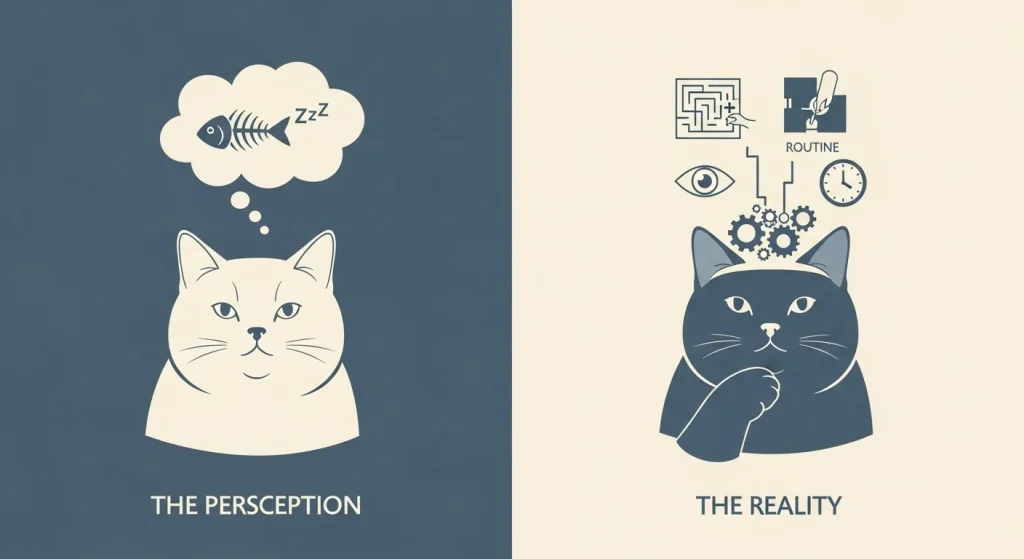
The British Shorthair presents a fascinating enigma to those who encounter them. Their most striking characteristic is undoubtedly their calm and stable temperament. Possessing a robust build, a dense, plush coat, and those famously round, expressive eyes, they exude an air of quiet contentment. They are known for their independence, their affectionate nature (though not overtly demanding), and an almost unflappable disposition that makes them well-suited to various living environments.
This inherent placidity, however, can sometimes be misinterpreted. A cat that is not constantly seeking attention or engaging in boisterous play might be wrongly perceived as less intelligent or less curious. The reality is far more complex. The British Shorthair’s serene nature is not a sign of vacant-ness, but rather a reflection of a thoughtful and measured approach to their environment. Their intelligence is not loud or demonstrative; it is a sophisticated, observational, and adaptive form of cognition that priorities comfort, routine, and a profound understanding of their immediate world. This article seeks to unravel this enigma, showcasing how their calm demeanour is, in fact, intertwined with their unique cognitive depth.
Understanding the intelligence of your British Shorthair is far more than an intellectual exercise; it directly impacts their quality of life and the strength of your bond. For owners, recognising the subtle indicators of their cat’s cognitive abilities allows for more enriching interactions and tailored care. By appreciating their specific intellectual strengths, you can provide an environment that truly caters to their needs, preventing boredom that can sometimes lead to behavioural issues.
Furthermore, a deeper understanding fosters a more profound respect for their individuality. Whether you are considering bringing a British Shorthair kitten into your home or are already a devoted guardian, delving into their cognitive makeup helps you provide a more stimulating and fulfilling life that honour their natural disposition. This insight empowers you to move beyond superficial assumptions and engage with your feline companion on a more meaningful level, strengthening the unique connection you share.
Before we can assess the intelligence of a British Shorthair, it’s crucial to define what “smart” truly signifies in the feline world. Unlike human metrics or the task-oriented intelligence often associated with dogs, feline intelligence is multifaceted and deeply rooted in their evolutionary history and survival instincts. It encompasses a cat’s capacity to learn from their environment, adapt to new situations, solve problems that affect their well-being, and understand social cues within their community, whether human or animal.
Cats are naturally adept at observational learning, remembering locations of resources, navigating complex spaces, and communicating their needs through subtle vocalisations and body language. Their intelligence is often expressed in ways that serve their immediate needs for comfort, safety, and access to resources, rather than through performing elaborate tricks or seeking external validation. Understanding this distinction is fundamental to appreciating the cognitive prowess of breeds like the British Shorthair, whose intelligence manifests in quiet, yet effective, ways.
Feline intelligence is not a singular, easily quantifiable trait. Instead, it is a rich tapestry woven from various cognitive abilities that work in concert. These include:
Observational Learning: The ability to learn by watching. A kitten might learn how to use a litter box or where the food bowls are simply by observing its mother or other cats.
Spatial Reasoning: Essential for navigating their territory, planning hunting routes, and finding safe vantage points.
Memory: Cats possess both short-term and long-term memory, allowing them to recall familiar faces, locations of food and water, and learned routines.
Problem-Solving: This is often geared towards achieving a desired outcome, such as accessing a treat, opening a door, or finding the most comfortable resting spot.
Social Intelligence: The capacity to interpret the emotional states of humans and other animals, and to communicate their own feelings and intentions effectively.
This complex interplay of skills means that a cat’s “smartness” can be observed in its hunting prowess, its ability to adapt to household routines, its understanding of social dynamics, and its capacity for problem-solving that directly benefits its comfort and survival.
Many equate intelligence with overt demonstrations of cleverness, such as rapid trick learning or highly energetic play. However, for many cat breeds, particularly those with a more reserved nature like the British Shorthair, intelligence is often expressed through more subtle, yet equally impressive, abilities. This “quiet brilliance” is characterised by:
Efficient Navigation: A cat’s ability to map its territory, remember the best routes, and move with grace and purpose.
Understanding of Routines: The capacity to learn and anticipate daily schedules, understanding when meals are served, when their humans return home, or when it’s time for quiet interaction.
Environmental Manipulation: Figuring out how to access a sunny spot, manipulate a puzzle toy for a treat, or even how to communicate a specific need with minimal fuss.
Social Acumen: Reading the room, so to speak, understanding the moods of their human companions and offering comfort or space as needed.
This understated intelligence ensures their comfort and security, demonstrating a thoughtful and pragmatic approach to life that is as valid and impressive as any overt display of cognitive skill.
When examining the intelligence of the British Shorthair specifically, we find a profile characterised by thoughtfulness, observation, and practicality. Unlike some breeds bred for high energy or specific task performance, the British Shorthair’s cognitive strengths are not typically displayed through boisterousness or a constant need for complex mental challenges. Instead, their intelligence is rooted in a profound understanding of their environment, a strong sense of routine, and an ability to prioritise their comfort and well-being with quiet efficiency.
They are keen observers, absorbing information about their surroundings and family dynamics without necessarily needing direct interaction or instruction. This reserved yet perceptive nature means their intelligence is often a source of quiet satisfaction for their owners, who learn to appreciate the subtle cues and thoughtful actions that define their feline companions. Their intellect is less about performing and more about understanding and adapting.
The hallmark of the British Shorthair breed is its exceptionally calm, stable, and self-possessed temperament. This trait is intrinsically linked to their learning style, which leans heavily towards observation and routine. Rather than engaging in frantic trial-and-error, they tend to watch, process, and then act with deliberation. This makes them adept at understanding and internalising the rhythms of their household. They quickly grasp when meals are served, when their human family members are likely to be home, and what constitutes a comfortable interaction.
Their learning is often a quiet, internalised process. They absorb the nuances of their environment and social circle without drawing attention to themselves. This observational learning means they can pick up on patterns and anticipate events with remarkable accuracy. While they may not be inclined to rapid-fire learning of complex commands, their intelligence is evident in their ability to master their domain, understand established routines, and respond thoughtfully to their surroundings. They strategise their actions, ensuring efficiency and comfort.
British Shorthairs exhibit a distinct form of practical intelligence, particularly when it comes to problem-solving that directly enhances their comfort and daily living. If a beloved toy rolls under furniture, they might not immediately engage in frantic retrieval efforts. Instead, they might observe the situation, wait for an opportune moment, or patiently await human assistance. Their problem-solving is geared towards achieving desired outcomes with minimal expenditure of energy.
This pragmatism is evident in their ability to secure the most comfortable sleeping spots, their efficient movement around their home territory, and their understanding of how to solicit attention or resources subtly. They are masters of their environment, adept at manipulating situations to ensure their needs are met without demanding direct intervention. This focus on practical, comfort-driven solutions underscores their intelligent, yet understated, approach to problem-solving. For instance, they might subtly position themselves near a cabinet that often contains treats, conveying their desire through presence rather than insistent meowing, a testament to their intelligent observation.
Despite their often-perceived independence, British Shorthairs possess a significant degree of social intelligence. They form deep, albeit frequently understated, bonds with their human families. Their communication style is nuanced, relying on a sophisticated understanding of body language, subtle vocalisations, and contextual cues. They are adept at reading the emotional states of their human companions, offering quiet companionship during times of stress or simply luxuriating in shared proximity.
Their “meows,” purrs, and chirps are often imbued with specific intent, understood by observant owners. This capacity to interpret and respond to social cues within the family unit demonstrates a refined form of emotional and social intelligence that is fundamental to their role as beloved companions. They are not overtly demonstrative in their affections, but their quiet presence and understanding are profound indicators of their social awareness and emotional connection.
The British Shorthair’s aptitude for learning and adaptability is intricately linked to their appreciation for routine. They find security and comfort in predictable patterns within their household, and their intelligence allows them to master these routines with ease. This mastery means they can anticipate events, understand expectations, and adjust their behaviour accordingly. While they may not be inclined to learn an endless repertoire of tricks, their adaptability is clearly demonstrated in how they navigate changes in their environment or schedule, typically with a calm and measured response.
Their intelligence enables them to develop a comprehensive understanding of their territory. They know the best vantage points for observation, the most effective escape routes if needed, and the prime locations for rest and relaxation. This deep familiarity with their domain highlights their spatial intelligence and their capacity to create a sense of order and security in their world. They are, in essence, intelligent managers of their own living spaces.
The unique intelligence profile of the British Shorthair is not accidental; it has been profoundly shaped by centuries of history and selective pressures inherent in their development as a distinct breed. Their journey from hardy working cats to cherished domestic companions has refined the cognitive traits that are most valued today, prioritising those that facilitate harmonious cohabitation. This evolution has cultivated a cat that is both independent and affectionate, intelligent and adaptable.
The lineage of the British Shorthair traces back to ancient domestic cats that are believed to have arrived in Britain with Roman legions. For centuries, these cats served a vital purpose, acting as skilled mousers in homes, barns, and docks, a role that demanded sharp predatory instincts, spatial awareness, and an inherent understanding of prey behaviour. Their long history on the British Isles, a relatively isolated environment, contributed to the refinement of their robust physique and distinctive, dense coat.
It wasn’t until the late 19th century that deliberate efforts began to standardise the breed and establish it as a distinct pedigree. This era was pivotal, focusing on refining their appearance and temperament to meet specific standards. This selective process began to favour traits that made them more amenable to domestic life, subtly shaping their intelligence towards companion ability while retaining a degree of their ancestral self-sufficiency. Their presence has also become significant in the United States, where the breed’s distinctive traits are highly sought after.
As societal views on pets evolved and cats transitioned from utilitarian workers to cherished family members, the breeding priorities for the British Shorthair also shifted. The emphasis moved away from purely survival-driven traits towards those that foster a calm, affectionate, and manageable disposition, perfectly suited for family life. Intelligence that facilitated harmonious cohabitation became paramount. This meant selecting for a balanced temperament—retaining independence and self-reliance while cultivating a gentler, more biddable nature.
The breed’s intelligence was thus subtly honed to prioritise an understanding of human family structures and an increased capacity for forming stable, affectionate bonds. Breeders have continued to select for these qualities, ensuring that the British Shorthair remains an intelligent, adaptable, and delightful companion animal that fits seamlessly into modern homes. This careful breeding program has been instrumental in shaping the breed’s renowned temperament and cognitive capabilities.
The perception of a British Shorthair’s intelligence is often a complex interplay between their outwardly calm demeanour and common societal understandings of what constitutes a “smart” animal. Many owners and prospective owners ponder if their placid nature signifies a less capable mind, perhaps even bordering on lethargic. This section aims to bridge that gap by presenting the reality of their cognitive abilities, showcasing them as distinct, valuable, and inherently intelligent.
The very qualities that make the British Shorthair so captivating—their dignified reserve, their plush appearance reminiscent of a teddy bear, and their independent spirit—can inadvertently lead to their intelligence being underestimated. Unlike breeds that are exuberantly eager to please and readily perform complex tricks, the British Shorthair’s approach to life is more measured and self-directed. They don’t typically seek constant validation or engagement through demanding activities.
Instead, their intelligence manifests in quiet observation, thoughtful problem-solving geared towards personal comfort and environmental understanding, and a keen awareness of their surroundings that doesn’t require overt displays. This subtle manifestation of their cognitive abilities means their “smartness” can easily be overlooked by those expecting more dramatic evidence of intellect, akin to how the enigmatic smile of the Cheshire Cat hints at a deeper, more mysterious intelligence. Their quiet competence is their hallmark.
Recognising the intelligence in your British Shorthair involves observing specific behaviours that demonstrate their cognitive prowess. These subtle yet telling signs include:
Mastery of Routine: They learn and anticipate daily schedules with remarkable precision, from feeding times to your return home. Many will greet you at the door with practised timing, a testament to their observational learning.
Environmental Awareness: They intuitively know the best spots for napping, the optimal times to receive attention, and can navigate their home territory with precision. They remember the locations of favourite toys, treat stashes, and comfortable resting places.
Problem-Solving for Comfort: Observe them figuring out how to access a desired resting spot, manipulating a puzzle toy to release a treat, or even how to nudge open a slightly ajar cabinet door. These actions reveal their practical intelligence and ingenuity.
Social Acumen: They possess a nuanced ability to read your moods, offering quiet companionship when you’re feeling down or sensing when you need personal space. This social perception is a key indicator of their emotional intelligence.
Selective Curiosity: While not always overtly demonstrative, they exhibit curiosity when something truly piques their interest, investigating new objects or sounds with thoughtful consideration. This indicates an active, albeit selective, engagement with their environment.
These are not the signs of a dim-witted pet, but rather of a cat that intelligently manages its world for optimal comfort and satisfaction.
While the British Shorthair is blessed with an innate intelligence, like all sentient beings, their cognitive abilities can be nurtured and enhanced. Providing the right environment and stimuli is crucial for keeping their minds sharp, their spirits engaged, and ensuring a happy, healthy life. This involves understanding their specific learning style and catering to their naturally observant and pragmatic nature.
Mental stimulation is not just a luxury; it is paramount for maintaining a cat’s cognitive health and preventing boredom. For the British Shorthair, this translates to providing activities that tap into their observant and thoughtful nature. Puzzle feeders that dispense treats are excellent for encouraging problem-solving and rewarding their efforts. Interactive toys that mimic prey, such as feather wands, laser pointers (used responsibly to avoid frustration), or crinkle balls, can engage their natural hunting instincts and strategic thinking.
Rotating toys regularly is key to preventing monotony and keeping their interest piqued. Creating vertical spaces, like multi-level cat trees or wall-mounted shelves, allows them to survey their domain from a safe height, fulfilling their natural inclination to observe. Even simply changing the location of a toy can provide a novel challenge. For a breed that appreciates routine, introducing subtle novelty keeps their minds active and adaptable. While they may not be considered overtly active cats in terms of constant running and jumping, their mental engagement is just as vital.
While traditional obedience training might not be the primary forte of the British Shorthair, they are certainly capable of learning through positive reinforcement. Clicker training, for instance, can be an effective method for teaching simple commands or behaviours, leveraging their intelligence in associating actions with positive rewards. Enrichment should always align with their natural behaviours and preferences.
For example, scent games, where treats are hidden around the house for them to find, engage their olfactory senses and problem-solving skills. Providing sturdy scratching posts and ample opportunities for safe exploration and observation can also significantly contribute to their overall mental well-being and cognitive development. Their intelligence is best tapped into through activities that they perceive as enjoyable play, rather than arduous tasks.
Optimal brain function, and by extension, a cat’s cognitive capabilities, is intrinsically linked to their overall health and nutritional status. A balanced diet rich in essential fatty acids, particularly Omega-3s (often found in high-quality fish oils), actively supports brain health and cognitive function. High-quality protein sources are also crucial for maintaining muscle mass, energy levels, and overall vitality, which are foundational for a sharp mind.
Regular veterinary check-ups are essential to ensure your British Shorthair is free from underlying health conditions that could subtly affect their cognitive abilities. A healthy body is the bedrock for a sharp mind. A British Shorthair that is well-cared for, both physically and nutritionally, is far more likely to exhibit its full cognitive potential throughout its impressive lifespan. Insurance data suggests that many British Shorthairs live well beyond 12.5 years, highlighting the importance of long-term health and nutrition for sustained cognitive vitality.
While this deep dive focuses on the unique intelligence of the British Shorthair, it’s helpful to briefly contextualise their cognitive profile within the broader feline spectrum. This allows for an appreciation of their specific strengths rather than attempting to force them into a comparison based on potentially inappropriate human-centric measures of intelligence. For instance, breeds often described as highly trainable or vocal, like the Russian Blue, may exhibit intelligence through different means, such as rapid response to commands or complex vocal communication. The British Shorthair’s intelligence is simply expressed differently.
Feline intelligence exists on a broad spectrum, influenced by a complex interplay of breed predispositions, individual personality nuances, and environmental factors throughout a cat’s life.
In contrast, breeds like the British Shorthair exhibit a more subdued yet equally valid form of intelligence. Their cognitive strengths lie in their exceptional observational skills, their profound understanding of their immediate environment and social dynamics, and their ability to manage their own comfort and interactions with remarkable efficiency and grace. Comparing them directly to breeds historically selected for specific tasks or higher energy levels would be akin to comparing distinct artistic mediums; each possesses a different, yet equally valuable, set of cognitive aptitudes. The British Shorthair’s intelligence is characterised by its quiet competence and thoughtful application.
The question of whether British Shorthairs are truly smart finds its answer not in a simple yes or no, but in a nuanced appreciation of their unique cognitive capabilities. Their intelligence is not loud, demanding, or ostentatious; it is a quiet, profound brilliance woven into the very fabric of their being. They are observant, thoughtful, and pragmatic, embodying a form of feline wisdom that priorities comfort, routine, and a deep understanding of their immediate world.
Their calm demeanour, often mistaken for a lack of intellect, is actually a testament to their controlled and efficient processing of information. They are not less intelligent; they simply express their intelligence differently. The British Shorthair, with its iconic Blue British colouration and steadfast nature, is more than just a pretty face; it is a companion animal possessing a sophisticated mind that enriches the lives of those who take the time to understand and appreciate it.
Beyond their striking physical attributes—the plush, dense coat, the endearing round head, and the expressive, large eyes—lies a complex and capable mind. The British Shorthair breed has been meticulously shaped over centuries, evolving from its origins as hardy working cats in Britain to its present-day status as one of the world’s most beloved domestic companions. This historical evolution has refined their intelligence, subtly favouring traits that foster harmonious and contented cohabitation with humans.
Their innate ability to master household routines, solve practical problems related to their comfort and needs, and form deep, understated yet profound bonds with their human families are all clear indicators of their considerable cognitive depth. Recognising these subtle yet consistent expressions of intelligence is paramount to truly understanding and appreciating this unique and dignified breed.
For owners, understanding and cherishing the British Shorthair’s specific brand of intelligence is the key to a fulfilling relationship. This means providing an environment that stimulates their observant, thoughtful, and problem-solving nature, rather than expecting rapid-fire tricks or constant high-octane play. Puzzle feeders that dispense treats, interactive toys that mimic hunting behaviours, and opportunities for them to survey their surroundings from elevated perches can all contribute significantly to their mental well-being.
Training, when approached with patience, consistency, and positive reinforcement, can build upon their capacity to learn and further strengthen the human-feline bond. Crucially, ensuring their overall health and providing a nutritionally balanced diet are fundamental to supporting their cognitive functions throughout their impressive lifespan. By embracing and nurturing their innate intelligence, owners can unlock the full potential of their British Shorthair, fostering a companion that is not only beautiful but also intellectually engaged and deeply connected.