
British Shorthair vs. British Longhair
The British Shorthair, often heralded as the “Cheshire Cat” of the feline world, is an icon of charm, stability, and historical gravitas. Standing right beside this beloved pedigree cat is its equally enchanting counterpart: the British Longhair. While both breeds are esteemed members of the feline family, choosing between British Shorthair and Longhair cats requires a nuanced understanding of their distinct temperaments and maintenance needs. Whether you are captivated by the dense, crisp coat of the Shorthair or the luxurious, flowing mantle of the Longhair, understanding their heritage, health requirements, and personality nuances is essential. You may like the dense, crisp coat of the Shorthair or the soft, flowing coat of the Longhair. You should learn about their background, health needs, and personalities before getting one. This guide provides a deep, data-driven analysis to help you navigate the nuances of these magnificent felines.
The history of the British Shorthair is inextricably linked to the expansion of the Roman Empire. When Roman soldiers arrived on the British Isles, they brought along feline companions to guard their grain stores against rodents. Over hundreds of years, these cats became the typical British farm and house cats. People value their strong bodies and thick coats that protect them from the changeable British weather. By the 19th century, visionaries like Harrison Weir, the “father of the cat fancy,” organised the first formal cat show at the Crystal Palace. Weir sought to elevate these street-hardy mousers into a recognised pedigree cat breed, emphasising their connection to the rugged European wildcat.
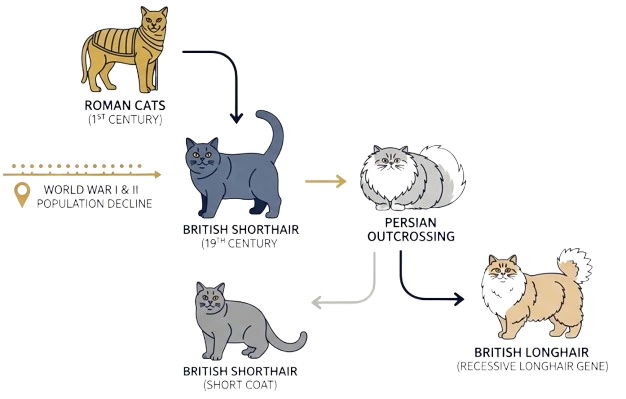
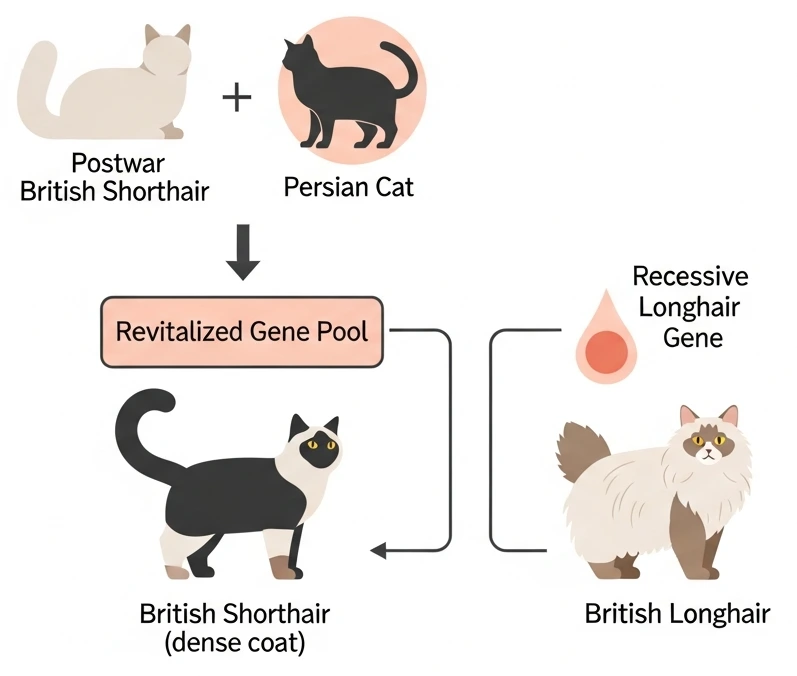
Following the devastation of the postwar years, the population of the British Shorthair plummeted to near-extinction levels. To revitalise the gene pool, breeders turned to Persian cats and other long-haired breeds. This strategic move successfully saved the breed’s structure but introduced the recessive longhair gene. For years, longhair kittens born into Shorthair litters were discarded or ignored. Eventually, enthusiasts saw the beauty of these long-coated cats. They worked to develop the British Longhair as a separate, recognised type. Today, the Longhair is celebrated for its unique aesthetic, distinct from the influence of the Turkish Angora or show-line Ragdolls, yet possessing a charm all its own.
The British Shorthair is one of the oldest cat breeds in history. Its ancestry can be traced back to the domestic cats brought by the Romans during their occupation of Britain. These cats were valued for their hunting prowess and, more importantly, their robust resilience against the damp, unpredictable British climate. Over centuries, these street-hardy felines were refined through selective breeding to emphasize their distinct “cobby” build and plush, protective coats. By the late 19th century, the British Shorthair became a foundation of early cat shows, admired for its sturdy reliability and calm demeanor.
Formal recognition acts as the bedrock for quality assurance. The Governing Council of the Cat Fancy (GCCF) in the UK maintains rigorous standards for these breeds. Similarly, The International Cat Association (TICA) and the Cat Fanciers’ Association (CFA) provide the frameworks that define the breed type. These organisations ensure that selective breeding focuses on health and structure rather than fleeting trends. By adhering to the Standard of Points, registered breeders protect the integrity of the British heritage that defines these cats.
The ‘cobby’ body type is the hallmark of the British breed—short, stocky, and immensely powerful. These cats possess a broad chest, sturdy frame, and short, thick legs, distinguishing them from the lithe build of a Russian Blue or a Siamese. While the British Shorthair and Longhair share this build, they are often described as “heavy,” reflecting a skeletal structure built for endurance rather than agility.
The facial architecture is defined by roundness. From the broad, circular skull to the famous “Alice in Wonderland” smile—created by full, pronounced jowls—the face is designed to look perpetually content. Their large, deep-set eyes, which can range from brilliant blue to deep gold, provide an intelligent, wide-eyed gaze that is essential to the breed standard.
The British Shorthair coat is famous for its density. This high-density double coat provides excellent insulation. It needs less care than longer-haired coats. To the touch, it feels “crisp” and plush, standing away from the body rather than lying flat, which serves as a tactile marker of high-quality breeding.
The British Longhair features a semi-long coat that is incredibly soft. This legacy, derived from Persian long-haired breeds, requires more management. They typically display a full ruff around the neck and “knickerbockers” on the haunches, requiring an owner who appreciates the aesthetic of a long-coated, regal companion.
The Longhair needs regular brushing. Brush it two to three times a week to stop mats, especially under the belly and behind the ears. Neglecting this grooming cycle can lead to discomfort, skin irritation, and the development of hairballs, which may increase the risk of hepatic lipidosis if the cat stops eating due to pain.
Proper grooming requires more than a standard comb. High-end enthusiasts often utilize pet dryer boxes to ensure the dense undercoat is thoroughly dried after bathing, preventing dampness that leads to fungal issues. For daily maintenance, high-quality slicker brushes are essential to keep the coat free of debris.
Both variants are renowned for their calm, dignified temperaments. They are the epitome of the “four paws on the ground” personality—intelligent and observant, they prefer sitting nearby to constant, needy physical affection. This makes them ideal for professionals who need a low-maintenance, quiet companion.
While both are low-energy, the British Longhair is often perceived as slightly more sedentary, possibly due to the influence of their Persian ancestors. However, both breeds thrive on routine and are generally well-behaved indoors.
Their steady, predictable nature makes them excellent family members. They are generally tolerant of children and often coexist peacefully with other pets, including dogs and other pedigree cat breeds like show-line Ragdolls, provided they are introduced properly.
Given their cobby frame, obesity is a significant risk. If a cat becomes overweight, it places immense pressure on their joints, potentially leading to early-onset arthritis. Strict portion control is vital to ensure a long life expectancy of 12–20 years.
You must provide regular veterinary care. This includes yearly check-ups, dental cleaning, and parasite prevention for these breeds. Using vet-approved pet toothpaste is a crucial habit to prevent dental disease, which can otherwise trigger systemic health issues.
Despite their laid-back nature, these cats are clever. Teaser toys and laser light pens encourage natural hunting instincts, while YouTube sound exposure videos can help habituate them to domestic noises, keeping their minds sharp and engaged.
These breeds are perfectly suited for automated homes. A litter Robot waste bin is highly recommended to keep the environment hygienic, while automatic feeders ensure caloric intake is consistent, preventing the sedentary weight gain common to the breed.
Nutrition is the foundation of a healthy coat. Many breeders advocate for high-protein diets or controlled raw feeding to maintain energy levels. Always discuss diet with your vet to avoid complications related to the breed’s predisposition to urinary issues.
Breeders set prices for pet-quality kittens based on their reputation. Show-quality or breeding-quality cats cost much more. The investment reflects the extensive health testing, pedigree lineage, and the time spent socialising the kitten.
Begin by contacting trustworthy, registered breeders. They follow professional standards. This will give your new cat the best start. Look for those who provide a vaccination record card and are open about the health history of their pedigree stud males.
Choosing between the British Shorthair and the British Longhair is a choice between two variations of the same magnificent, historic legacy. Whether you prioritise the low-maintenance, crisp coat of the Shorthair or the luxurious elegance of the Longhair, you are choosing a cat that embodies the resilience and beauty of British heritage. By focusing on ethical sourcing, proactive health care, and modern environmental enrichment, you ensure a vibrant, long life for your companion. Always prioritise health testing over convenience, and remember that an investment in a high-quality kitten from a reputable breeder is an investment in years of companionship.
Your next step should be to contact us to begin your journey with a British Shorthair, a truly majestic feline ambassadors.
