
Why Is a Female Cat Called a Queen? The Meaning Behind the Term
In the intricate world of feline care, terminology often acts as a bridge between scientific understanding and compassionate stewardship. The term “queen” is perhaps the most prominent example of this, frequently used by breeders, veterinarians, and animal welfare organisations to denote an intact female cat. While the title may sound like an aristocratic nod to a cat’s sometimes regal demeanour, it represents a profound biological reality. For those responsible for female cats, understanding the “queen” designation is the first step toward providing appropriate care. This article explores the biology, behaviour, and specific needs of queen cats, separating the romanticised view of their status from the essential, high-stakes requirements of their reproductive life cycle.
The Difference Between a Queen and a Molly
What Does "Queen" Mean in Female Cats?
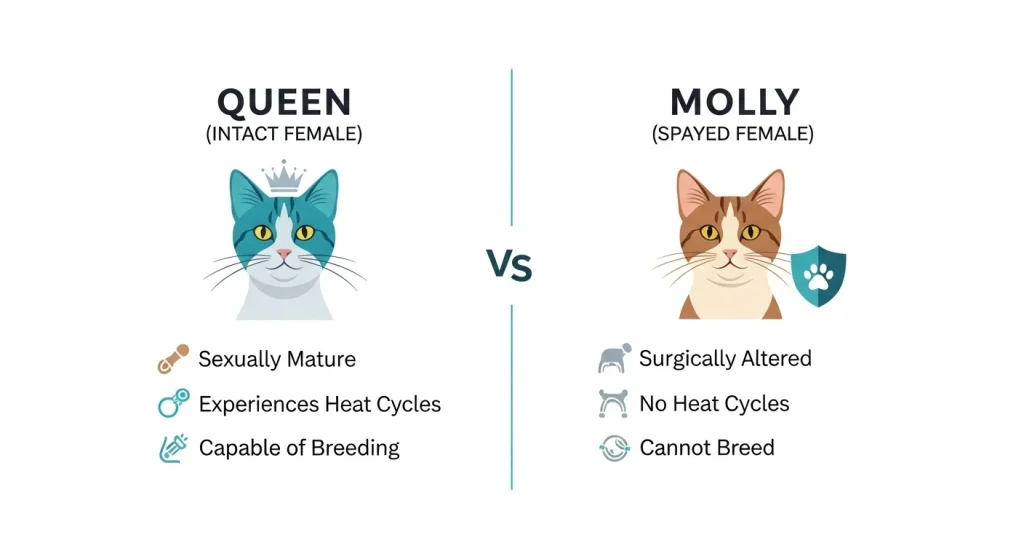
In professional and veterinary circles, language is precise. A “queen” is defined as an unspayed, sexually mature female cat capable of breeding. In contrast, a “molly” or sometimes a “queen” that has been altered is a female cat that has been spayed. This distinction is far more than a naming convention; it is a clinical marker. Knowing whether a cat is a queen is essential for providing effective veterinary care, as hormonal cycles and reproductive risks, such as pyometra or gestational health issues, are exclusive to intact females.
While the term “queen” is colloquially associated with pedigree breeding programs, it is not an exclusive title. Any unspayed domestic cats, regardless of breed, age, or genetic background, are biologically classified as queens. The term serves as an important identifier for veterinary professionals. When a cat owner visits a veterinary care facility, identifying the pet as a queen allows the medical team to immediately account for potential behavioural traits, such as increased vocalisation during heat, or specific physical risks associated with an intact reproductive system.
The word “queen” originates from the Old English cwen, a term denoting a woman of high standing or royalty. In the history of the Felis catus, this linguistic connection has persisted, likely due to the cat’s historically independent and assertive nature. By using the title, we acknowledge the complex role these animals play within the household. It elevates the discussion of feline care from mere pet ownership to a form of guardianship that respects the animal’s natural dignity and biological status.
The lineage of our household companions stretches back to the African wildcat of the Fertile Crescent. Over thousands of years, these animals transitioned from solitary hunters of Mus musculus (the house mouse) to integral members of human society. Throughout this evolution, their reproductive success remained tied to their ancestral instincts. Modern selective breeding has preserved many of these behaviours, meaning the modern queen still requires environments that reflect her wild ancestry, even when living in a climate-controlled apartment.
Many cat owners feel the title is entirely appropriate, as the “queenly” temperament marked by sharp intelligence, territoriality, and a penchant for commanding their environment is a hallmark of the species. A queen often displays high standards for her personal space. Whether she is lounging on a high perch or surveying her domain, her demeanour often suggests she is indeed the ruler of the home, a personality trait that animal behaviourists frequently observe and document.
A pubertal queen is a young female who has reached her first estrous cycle, a milestone typically occurring between four and twelve months of age. During this developmental phase, the cat’s endocrine system shifts, preparing her for the demands of reproduction. For the owner, this period often introduces sudden changes, including vocalisation and an increase in territorial aggression, as the young cat begins to assert her maturity and readiness to mate.
The reproductive life of a queen is managed by a complex hormonal interplay. Follicular function drives the production of estradiol-17β, the hormone responsible for the behavioural changes seen during heat. Following the release of eggs, the luteal phase begins, characterised by rising progesterone levels. This hormonal environment is unique to the queen and significantly influences her temperament, physical health, and even her immune response.
Historically, cats were considered strict induced ovulators, meaning they only released eggs following the physical stimulation of mating. However, modern research including studies conducted at Kansas State University shows that many queens experience spontaneous ovulation. This biological nuance is critical; it means that the hormonal and physical consequences of the reproductive cycle can occur even without a male present, requiring owners to remain vigilant regarding potential health shifts.
Feline gestation lasts approximately 63 to 65 days. During this window, the queen’s physiology undergoes immense change to support the developing litter. Proper nutrition is paramount; the queen requires a high-caloric, nutrient-dense diet to ensure the health of her kittens. Monitoring her weight and temperament during this time is a core responsibility for the owner, as any sign of illness must be addressed immediately to prevent complications.
As labor approaches, the queen will signal her readiness. She will often become restless and begin searching for a secure place. Owners should look for subtle shifts in cat body language, such as a desire for seclusion or frequent grooming. The delivery itself the act of queening requires a calm environment to ensure the queen feels safe enough to complete the process without interruption.
The term “queening” acknowledges the profound physical and instinctual process of birth. It is a biological event that requires the cat to manage pain, ensure the safety of her neonates, and maintain her own health. By labelling the process with a specific verb, we highlight the severity and the unique biological importance of the event, distinguishing it from general birth processes in other animals.
During the estrous cycle, a queen’s communication shifts dramatically. She will often use high-pitched, insistent vocalizations to signal her presence to potential suitors. While these sounds can be disruptive to the household, they are a fundamental part of the cat body language of an intact female. Providing mental stimulation through puzzle feeders can sometimes help manage the restlessness associated with these hormonal surges.
Once a litter is born, the queen’s priority shifts entirely to protection. Maternal aggression is a natural, healthy instinct that ensures the safety of the kittens. A mother may hiss or swat at visitors or even other pets she previously tolerated. This behaviour is distinct from redirected aggression, where a cat lashes out due to an external, unidentifiable frustration. Understanding that this aggression is rooted in maternal love is essential for managing the home environment safely.
Nesting behaviour is an instinctual drive where the queen seeks a safe, quiet, and warm location to give birth. In a home, she may target closets, drawers, or quiet corners. Proactively setting up a queening box satisfies this biological urge.
The ideal nesting area should be a sanctuary. It must be quiet, draft-free, and tucked away from high-traffic zones. Incorporating scratching posts nearby allows the queen to express natural behaviours without leaving her immediate vicinity. The goal is to minimise stress, as an anxious queen may abandon her kittens or, in extreme cases, struggle with the hormonal shifts that dictate her maternal care.
A nursing queen has massive nutritional requirements. The production of milk demands high levels of protein, fats, and calcium to prevent the depletion of her own body reserves. Veterinary-recommended diets are essential here. If a queen does not receive adequate nutrition, both her health and the development of her kittens can be severely compromised, leading to long-term health issues.
Cats are biologically neophobic they are inherently suspicious of new or changing environments. A queen is especially sensitive to stress, which can negatively impact her milk supply and maternal instincts. To mitigate this, keep the environment consistent. If external stressors occur, provide hiding spots and ensure the litter box remains in a familiar, accessible location to prevent the queen from feeling vulnerable.
Pregnancy presents specific health risks, including gestational complications and the potential for feline diseases. Owners must keep a close watch for signs of distress, such as lethargy, loss of appetite, or unusual discharge. Regular check-ups with a veterinarian are the only way to ensure the queen remains healthy and to manage any potential complications before they become critical.
Before any breeding occurs, testing for the feline immunodeficiency virus is non-negotiable. Responsible ownership means knowing the status of your cat’s health through rigorous testing. A clean bill of health is the best foundation for a thriving litter and a long, comfortable life for the mother.
When her breeding days conclude, transitioning the cat from “queen” to “molly” via spaying is a vital act of care. Neutering eliminates the risk of reproductive infections, such as pyometra, and significantly lowers the chance of developing mammary cancers. This surgical transition ensures that the cat, having served her role in the cycle of life, can move into her senior years with health, comfort, and vitality.
The term “queen” is far more than a title of affection; it is a profound classification that touches every aspect of a female cat’s biology. From the hormonal surges of a pubertal queen to the protective instincts of a mother managing a nesting area, the life of an intact female is governed by complex, ancient rhythms. By understanding these needs and the importance of regular veterinary care we can ensure that our feline companions live as comfortably as the titles we bestow upon them. Whether your cat is a mother of many or simply the sovereign of your living room, respecting her biological and behavioural needs is the hallmark of truly responsible feline ownership.
