
Fading Kitten Syndrome: UK Symptoms, Causes, and Lifesaving Treatment
The arrival of a new litter of kittens is often met with immense joy and anticipation. However, for many breeders in the UK, this excitement can quickly turn to heartbreak with the onset of Fading Kitten Syndrome (FKS). This critical condition, characterised by a rapid decline in a neonate’s health, is a silent threat that strikes without warning, leaving little time for intervention. Understanding the nuances of FKS is paramount for any cat owner, particularly those involved with breeding or fostering, as swift and informed action can be the only barrier between life and death. In the UK, where an increasing number of cats and kittens face abandonment – signalling a ‘deepening crisis’ with a reported 30% increase in abandonments in 2025 compare to 2024 – the vulnerability of young felines is amplified. Kittens, making up a substantial portion of intakes in animal shelters, are disproportionately affected by conditions like FKS, contributing significantly to their high non-live outcomes. This article aims to equip UK kitten owners with comprehensive knowledge about Fading Kitten Syndrome, detailing its symptoms, underlying causes, immediate first aid measures, veterinary diagnostic approaches, and the crucial lifesaving treatments available.
The fragility of newborn kittens means they are susceptible to a myriad of challenges from the moment they are born. Fading Kitten Syndrome is not a disease but rather a complex of signs indicating severe illness and physiological compromise in a neonate. It is a term used to describe the sudden, unexplained decline in health observed in otherwise seemingly healthy kittens. The term “fading” aplay describes the rapid deterioration, where a kitten that was active and feeding one moment can become lethargic and unresponsive the next. This swift progression underscores the critical need for owners to be hyper-vigilant and to recognise the subtle, yet vital, indicators that might precede a crisis. In the UK, awareness of FKS is vital for all cat guardians, from experienced breeders to first-time pet owners, as any kitten can be affected.
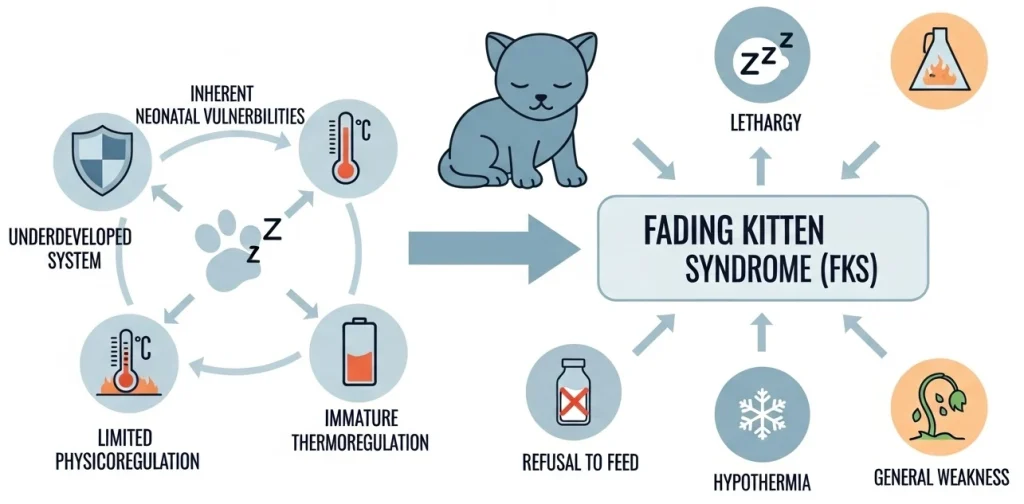
Fading Kitten Syndrome is a complex of symptoms resulting from a newborn kitten’s natural vulnerabilities. Fading Kitten Syndrome (FKS) is a broad term encompassing a range of conditions that lead to the rapid deterioration and often death of neonatal kittens, typically within the first few weeks of life. It is not a specific diagnosis but a description of a clinical state. Kittens are born with underdeveloped immune systems, immature thermoregulatory capabilities, and limited physiological reserves, making them acutely vulnerable to environmental changes, infections, and metabolic imbalances. The syndrome typically manifests as lethargy, refusal to feed, hypothermia, and general weakness, progressing rapidly to collapse and death if not aggressively treated.
Early identification is crucial for survival. Symptoms that may indicate FKS include: failure to gain weight or losing weight, lethargy and lack of responsiveness, refusal to nurse, crying excessively or showing signs of discomfort, cold body temperature, pale or blue gums.
Understanding this syndrome is crucial, as early recognition and intervention are key to improving survival rates. Vigilance is not merely advisable; it is essential for UK kitten owners, especially given the general trends in cat ownership and welfare. The sheer number of kittens entering the UK’s rescue system, coupled with the financial and emotional barriers owners face in accessing veterinary care – with cost and stress cited by 25% each as deterrents to frequent vet visits – means that early detection of issues is often the only recourse. Furthermore, a 2024 UK study highlighted that weight loss or a lack of weight gain between birth and Day 2 is a critical risk factor for mortality in kittens, irrespective of birth weight. This underscores the importance of daily, if not more frequent, monitoring of each kitten’s progress. For breeders, maintaining the health of their queens and ensuring optimal conditions for neonatal development are foundational steps in preventing FKS.
The hallmark of Fading Kitten Syndrome is its rapid progression. There is often a very narrow window of opportunity – sometimes referred to as the “golden hour” – during which decisive action can make a life-saving difference. Delaying intervention can lead to irreversible physiological damage. Therefore, recognising the signs of distress and understanding the immediate first aid steps an owner can take while en route to veterinary care is critical. Prompt action involves assessing the kitten’s vital signs, providing external warmth if hypothermic, and ensuring appropriate hydration and nutrition, all while swiftly contacting a veterinary professional.
In the United Kingdom, Fading Kitten Syndrome remains a significant concern for veterinarians, breeders, and rescue organisations. Its multifactorial nature means that identifying a single cause is often challenging, but understanding the common pathways to collapse is crucial for effective management. The vulnerability of very young kittens is a universal veterinary truth, but specific environmental factors, disease prevalence, and owner access to care in the UK can influence its manifestation and outcome.
Fading Kitten Syndrome is not a specific diagnosis but a syndrome that describes the rapid decline of a neonate. It can be triggered by a wide array of underlying issues, often occurring in combination. These can include severe infections, congenital abnormalities, metabolic derangements like hypoglycemia (low blood sugar) and hypothermia (low body temperature), and complications arising from inadequate maternal care. The kitten’s immature physiological systems are unable to cope with these challenges, leading to a systemic collapse. The term itself is a descriptor of the observed phenomenon: a kitten that was previously normal suddenly begins to weaken and ‘fade’.
Newborn kittens are in an exceptionally vulnerable stage of development. Their thermoregulatory systems are immature, meaning they cannot independently maintain a stable body temperature and rely entirely on external heat sources and their mother. Their immune systems are also poorly developed, leaving them susceptible to infections. Furthermore, their ability to metabolise nutrients efficiently is limited, making them prone to rapid hypoglycemia if they miss even a single feeding. Congenital defects, often not immediately apparent, can also contribute to their fragility. In the UK, as in many other countries, kittens under five months make up a significant proportion of intakes in animal shelters, and FKS contributes heavily to their high mortality rates.
The “fading” aspect of the syndrome refers to the alarming speed at which a kitten’s condition can deteriorate. What might begin as subtle signs like reduced nursing or slightly less activity can escalate within hours to profound lethargy, hypothermia, and a complete lack of response to stimuli. This rapid decline is devastating because it leaves owners and veterinarians with very little time to react. The physiological cascade involved in FKS can quickly lead to organ failure, circulatory collapse, and death. The impact on owners, particularly those who have invested significant time and emotional energy into caring for a vulnerable litter, can be profound, leading to significant anxiety and stress.
Early recognition of Fading Kitten Syndrome is the single most critical factor in improving a kitten’s prognosis. The symptoms can be subtle at first, making it crucial for owners to observe their kittens closely and understand what constitutes normal behaviour and development.
Before a kitten shows overt signs of distress, several subtle indicators can signal that something is amiss. These often include a lack of progress in expected development. For example, a kitten that is not gaining weight consistently is a major cause for concern; a 2024 study identified weight loss or a lack of weight gain between birth and Day 2 as a critical risk factor for mortality in kittens. Other early signs include reduced vocalisation or a quieter demeanour compared to littermates, decreased suckling vigour, and slight lethargy. Owners might also notice a kitten being slightly cooler to the touch than its siblings or exhibiting a slightly weaker cry. While individually these might seem minor, a cluster of these signs warrants immediate attention.
When FKS progresses, the signs become far more alarming and demand immediate veterinary intervention. These obvious distress signals include:
Complete Lack of Response: The kitten appears unresponsive to touch, sound, or light.
Extreme Lethargy: The kitten is limp, weak, and unable to move or stand.
Hypothermia: The kitten feels cold to the touch, with a rectal temperature below 35.5°C (96°F).
Pale Gums: Indicative of poor circulation or anaemia.
Shallow or Laboured Breathing: The kitten struggles to breathe, with a rapid, weak heart rate.
Persistent Crying: A weak, continuous cry can indicate pain or distress.
Muscle Weakness: Inability to hold its head up or move its limbs.
Vomiting or Diarrhoea: Especially if accompanied by other symptoms.
Abdominal Distension: Potentially indicating digestive issues or fluid buildup.
Any kitten exhibiting these signs needs immediate veterinary care; time is of the essence.
The reasons behind Fading Kitten Syndrome are diverse and often interconnected, reflecting the kitten’s fragile physiological state and susceptibility to various external and internal challenges. In the UK, understanding these causes helps owners implement preventative strategies.
Environmental factors play a significant role in kitten health. Inadequate warmth is a primary culprit. Newborn kittens cannot regulate their own body temperature and require an ambient temperature of around 30-32°C (86-90°F) in their first week, gradually decreasing thereafter. Hypothermia can lead to hypothermia, a critical condition that slows down metabolic processes, impairs circulation, and makes kittens susceptible to infection. Overcrowding can exacerbate the spread of disease and increase stress levels, while poor hygiene creates a breeding ground for pathogens.
The health of the mother cat (queen) is crucial. Issues like mastitis (infection of the mammary glands), insufficient milk production, or a large litter size can lead to malnutrition and dehydration in the kittens. Stress experienced by the queen can also negatively impact milk quality and quantity. From the kitten’s side, congenital abnormalities, such as heart defects or cleft palates, can present as FKS. Premature birth or low birth weight kittens inherently have a poorer chance of survival due to underdeveloped organ systems. These factors contribute significantly to the increased risk observed in certain breeds; for example, Bengal cats had a remarkably high cumulative kitten mortality rate of 23.4% up to 12 weeks of age in a 2024 UK study on pedigree cats.
Infections are a leading cause of FKS. Kittens are highly susceptible to a range of viral, bacterial, and parasitic pathogens. Common viral culprits include Feline Herpesvirus (FHV-1) and Feline Calicivirus (FCV), which can cause respiratory and ocular infections. Bacterial infections from agents like E. coli, Salmonella, and Streptococcus can lead to septicaemia (blood poisoning) and severe systemic illness. Parasitic burdens, such as Toxocara roundworms, can also severely weaken kittens. In the UK, the prevalence of Toxocara is significant, with an estimated 26% of cats potentially shedding these eggs by 2025, posing a constant threat, often transmitted maternally and severely weakening young kittens.
Hypoglycemia, or low blood sugar, is a common and rapidly fatal complication of FKS. Kittens have limited glycogen stores and can quickly become hypoglycemic if they miss feedings or are unable to nurse effectively. This state is critical because glucose is the primary energy source for the brain and other vital organs. Dehydration, often resulting from poor fluid intake, can compound these metabolic issues. Nutritional deficiencies in either the queen or the kitten can also impair growth and immune function.
Accidental ingestion of toxins or exposure to medications given to the queen during pregnancy can also lead to neonatal illness and fading. This could include exposure to smoking, which is detrimental to all cats, especially vulnerable neonates. Other underlying congenital conditions that may not be immediately obvious at birth can also manifest as failure to thrive. While less common, conditions that impact blood flow or organ function can present as FKS symptoms.
When Fading Kitten Syndrome is suspected, immediate action is critical. The following steps are essential first aid measures that can be administered while preparing for or travelling to veterinary care.
“Golden hour”
The term “golden hour” refers to the critically short period following the onset of severe illness during which effective intervention offers the best chance of survival. For Fading Kitten Syndrome, this window is often even shorter. The rapid physiological collapse means that prompt actions can halt the downward spiral, restoring vital functions and giving veterinary professionals a better chance to stabilise the kitten. Delaying these initial steps can lead to irreversible damage to vital organs.
Hypothermia is a common and treatable cause of fading in kittens. The first priority is to gently warm the kitten. This should be done gradually and safely. Use a warm water bottle wrapped in a towel, a dedicated pet heating pad set on its lowest setting, or a microwaved heat disc designed for animals. Avoid direct contact with a hot water bottle or heating pad to prevent burns. Place the kitten in a small, enclosed space like a box or carrier lined with soft bedding, alongside the warming source, ensuring the kitten can move away if it becomes too warm. Monitor the kitten’s temperature rectally if possible, aiming to bring it up slowly towards the normal range of approximately 37.2-38.3°C (99-101°F).
If the kitten is conscious and able to swallow, offering fluids can be vital. This might involve a small amount of warmed, sterile electrolyte solution or a specialised kitten milk replaces. Syringe feeding should be done with extreme caution, ensuring the kitten is upright and the milk is administered slowly to prevent aspiration into the lungs, which can cause pneumonia. If the kitten is completely unresponsive or struggling to swallow, do not attempt to force feed, as this could be dangerous. In such cases, seek veterinary advice on the best method, which might involve assisted feeding via a nasogastric tube. Ensure the kitten has access to its mother if she is healthy and attentive, as maternal milk is the ideal source of nutrition and antibodies.
A calm and clean environment is essential for a sick kitten. Place the kitten in a quiet, draft-free area away from other pets and loud noises. This minimises stress, which can further exacerbate their fragile condition. Hygiene is paramount; ensure all bedding is clean and regularly changed, and handle the kitten with clean hands to avoid introducing secondary infections. A stressed kitten’s physiological systems are already compromised, and external stressors can accelerate deterioration.
Before contacting or travelling to the vet, gather as much information as possible. Note the kitten’s age, breed (if known), weight (if known), symptoms observed, when they started, what you have done (warming, feeding attempts), and any details about the mother cat’s health and the litter size. This information is invaluable to the veterinarian in making a rapid diagnosis and developing a treatment plan. Being able to provide details about any observed changes in heart rate, breathing patterns, or response to stimuli will assist the vet significantly.
Upon arrival at the veterinary clinic, a thorough diagnostic process will commence to identify the underlying cause of the fading symptoms and to initiate life-saving treatments. The veterinary team will work quickly to assess the kitten’s condition.
The veterinarian will begin by asking detailed questions about the kitten’s history. This includes information about the pregnancy, birth, the mother cat’s health, the number of kittens in the litter, feeding habits, any observed symptoms, and the timeline of their onset. Questions about the kitten’s environment, diet, and any potential exposure to toxins or sick animals will also be asked. This history is crucial, as it provides vital clues to potential causes, such as environmental stress, maternal issues, or infectious agents.
A comprehensive physical examination is next. The vet will assess the kitten’s general condition, including its level of alertness, degree of lethargy, and overall body condition. Key vital signs such as temperature, heart rate, respiratory rate, and capillary refill time (an indicator of blood flow and circulation) will be meticulously recorded. The abdomen will be palpated to check for distension or pain, and the gums will be inspected for colour. The kitten’s hydration status will be evaluated. Any physical abnormalities, such as congenital defects, will be noted. The vet will also assess the kitten’s response to stimuli, including pain.
Key Diagnostic Procedures a UK Vet Might Perform
To pinpoint the cause of FKS, a veterinarian may perform several diagnostic procedures:
Blood Tests: These are essential for assessing organ function, detecting inflammation, electrolyte imbalances, and checking blood glucose levels. A complete blood count (CBC) can reveal signs of infection or anaemia, while a biochemistry panel can evaluate kidney and liver function. Blood tests are critical for identifying underlying metabolic derangements or systemic inflammation.
Blood Glucose Measurement: A quick finger-prick test can immediately identify hypoglycemia, a common and life-threatening issue in fading kittens.
Fecal Analysis: A sample of faeces may be examined for the presence of intestinal parasites, which can significantly weaken a kitten.
Imaging: If a congenital defect, such as a heart anomaly or a blockage in the digestive tract, is suspected, X-rays or ultrasound may be used.
Infectious Disease Screening: Swabs may be taken for viral testing, or samples sent to a laboratory for bacterial culture and sensitivity testing to identify specific pathogens.
Once the diagnostic tests are complete, the veterinarian will explain the findings, providing a diagnosis or a list of the most likely causes for the kitten’s condition. The prognosis, or the likely outcome of the illness, will also be discussed. Factors influencing the prognosis include the kitten’s age, its overall condition upon arrival at the clinic, the specific underlying cause(s), and the speed and effectiveness of the treatment initiated. It is important for owners to understand that even with aggressive veterinary intervention, FKS can unfortunately have a poor prognosis due to the severity of the underlying issues and the kitten’s inherent fragility.
Treatment for Fading Kitten Syndrome is intensive and often requires hospitalisation in a veterinary clinic equipped for neonatal critical care. The goal is to stabilise the kitten, address the immediate life-threatening issues, and treat any identified underlying causes.
Veterinary interventions for Fading Kitten Syndrome focus on supportive care and addressing specific problems. The first priority is usually to correct hypothermia and hypoglycemia. Kittens are typically placed in an incubator to maintain a stable, controlled temperature and humidity. Intravenous (IV) fluids are administered to combat dehydration and restore electrolyte balance. If hypoglycemia is present, a glucose solution is added to the IV fluids or administered directly.
Infections are tackled with broad-spectrum antibiotics, and sometimes antivirals or antifungals, depending on the identified pathogen. Nutritional support is vital; if the kitten cannot nurse effectively, it will be fed via a syringe or, in more severe cases, a nasogastric tube to ensure adequate caloric intake. In some critical situations, parenteral nutrition (feeding directly into a vein) might be considered.
Other supportive therapies may include oxygen therapy for respiratory distress, pain management if pain is evident, and in rare instances, blood transfusions if severe anaemia is diagnosed. Continuous monitoring of vital signs, including heart rate, blood flow, and response to treatment, is crucial. The veterinary team will work diligently to manage any secondary complications, such as pneumonia or secondary infections, that may arise. While conditions like chest pain or heart attack are human medical terms, the severe physiological distress and circulatory compromise observed in fading kittens share the underlying critical nature of compromised vital organ function. The medications used are carefully selected based on the kitten’s age and condition.
While treatment can be lifesaving, preventing Fading Kitten Syndrome through proactive measures is always the preferred approach. Responsible ownership and breeding practices significantly reduce the risk.
Ensuring a warm, clean, and safe environment for pregnant queens and their litters is fundamental. This includes providing a comfortable nesting box with a reliable, safe heat source and maintaining good hygiene to minimise exposure to pathogens. Regular health checks for the queen, including vaccinations and parasite control, are vital to prevent the transmission of diseases to her kittens. In the UK, effective parasite control is paramount, as figures suggest a significant prevalence of parasites like Toxocara. Preventative measures are estimated to save millions of pounds annually in household savings, highlighting their economic and health benefits.
Daily monitoring of kittens for weight gain, activity levels, and feeding behaviour is essential. Any deviation from expected progress should be investigated promptly. For breeders, adherence to ethical practices, including health screening of breeding stock for genetic predispositions and ensuring adequate resources for neonatal care, is paramount. Some breeds, like Bengals, show higher kitten mortality rates, underscoring the need for breed-specific awareness and management. Responsible breeding practices can help mitigate these inherent risks.
Owners can implement crucial lifestyle changes to foster a healthier environment for kittens. This includes maintaining rigorous hygiene protocols, ensuring a quiet and stable living space free from stress, and committing to consistent monitoring. Avoiding smoking around kittens is also critical, as passive smoke inhalation can be detrimental to their respiratory health. Understanding the barriers to veterinary care, such as cost and stress, cited by cat owners, means that owners need to prioritise making veterinary visits a non-negotiable aspect of kitten care. This proactive approach, coupled with swift action at the first sign of trouble, forms the best defence against Fading Kitten Syndrome.
The journey with a fading kitten is fraught with emotional challenges. The intensity of caring for a critically ill neonate, coupled with the unpredictable nature of FKS, can lead to significant stress, anxiety, and grief for owners. Witnessing a kitten rapidly deteriorate is deeply distressing, and the potential for loss can weigh heavily on one’s mental health.
It is vital for owners to acknowledge that the emotional impact of dealing with Fading Kitten Syndrome is real and valid. The bond formed with a fragile kitten, even a short one, can be profound. If a kitten is lost, allowing oneself to grieve is a natural and necessary part of the process. Many veterinary clinics and animal welfare organisations in the UK understand the emotional toll and can offer support or resources.
For owners navigating the challenges of FKS, or coping with loss, connecting with others who have similar experiences can be incredibly beneficial. While specific FKS support groups may be niche, general feline welfare forums, rescue organisation pages, and veterinary practice websites often provide access to advice and communities. These platforms can offer practical tips, shared experiences, and emotional solidarity. Looking for UK-based online communities or local animal rescue centres that offer support can provide a sense of connection and understanding. Resources like Cats Protection or the RSPCA can offer guidance and point owners towards appropriate support groups or helplines.
Fading Kitten Syndrome remains one of the most heartbreaking challenges in feline neonatal care. It is a complex condition driven by a confluence of factors including environmental instability, maternal health, infectious agents, and the inherent vulnerability of immature kittens. For cat owners and breeders across the UK, understanding the subtle and overt symptoms is the first step in effective intervention. The rapid progression of FKS means that immediate actions, prioritising warmth, gentle hydration, and swift veterinary consultation, are paramount. While veterinary diagnostics and intensive treatments offer a lifeline, prevention through optimal queen and kitten care, stringent hygiene, and proactive monitoring remains the most effective strategy. The emotional impact on owners is significant, and seeking support groups and acknowledging grief is an important part of the process. By arming ourselves with knowledge, fostering vigilance, and prioritising prompt veterinary care, we can collectively strive to improve the survival rates of these tiny, fragile lives, offering them the best possible chance in their critical first weeks. Consulting reputable UK veterinary websites and animal welfare organisations can provide ongoing guidance and resources for the best care of neonatal kittens.
