Understanding HCM in British Shorthairs
Hypertrophic Cardiomyopathy (HCM) in British Shorthair Cats
Unmasking the Silent Threat
The British Shorthair, with its plush coat, round “Cheshire cat” face, and serene disposition, is the embodiment of a gentle giant. These cats are cherished for their calm and affectionate nature, making them beloved companions in homes around the world.
In fact, their popularity is so immense that according to the GCCF’s 2024 registry data, the British Shorthair accounts for about half of the annually registered kittens in its native country, making it the most popular pedigreed breed in the UK (Wikipedia, 2025).
Under the calm appearance, there is a serious hidden health risk. The cats have a genetic chance of getting Hypertrophic Cardiomyopathy (HCM). It is the most common heart disease in cats. This condition can develop silently, showing no outward signs until it reaches an advanced, life-threatening stage. For owners of this dignified breed, understanding HCM isn’t just a matter of curiosity; it’s a critical component of responsible and loving pet ownership. This article unmasks this silent threat, providing the essential knowledge needed to protect your cherished companion.
The appeal of the British Shorthair is undeniable. They are sturdy, independent, and remarkably good-natured. Their relatively low activity level and placid temperament make them ideal indoor pets. However, this same calm demeanour can inadvertently conceal the early stages of a serious heart condition.
Unlike more active breeds, a slight decrease in stamina or a reluctance to play might go unnoticed, allowing hypertrophic cardiomyopathy (HCM) to progress undetected. This intersection of their gentle nature and genetic predisposition is what makes proactive health awareness so crucial for this breed.
Hypertrophic Cardiomyopathy has earned its reputation as a “silent threat” because cats are masters at hiding illness. Their evolutionary instincts compel them to mask pain and weakness. In the early to moderate stages of HCM, a cat may feel perfectly fine and exhibit no noticeable symptoms. The heart is compensating for its inefficiency, and the cat’s daily routine remains unchanged.
For the British Shorthair, this is compounded by their stoic personality. Cats are less likely to show pain or clear signs of illness. This makes it very hard for even careful owners to notice problems. A crisis like heart failure or a blood clot may happen first.
To protect your cat, it’s essential to first understand the nature of the disease itself. HCM is a specific and primary disease of the heart muscle that is progressive and, at present, has no cure. It is the most common form of feline cardiomyopathy and a significant cause of cardiac-related illness and death in cats. Cardiomyopathy simply means “disease of the heart muscle.” There are several types of heart disease.
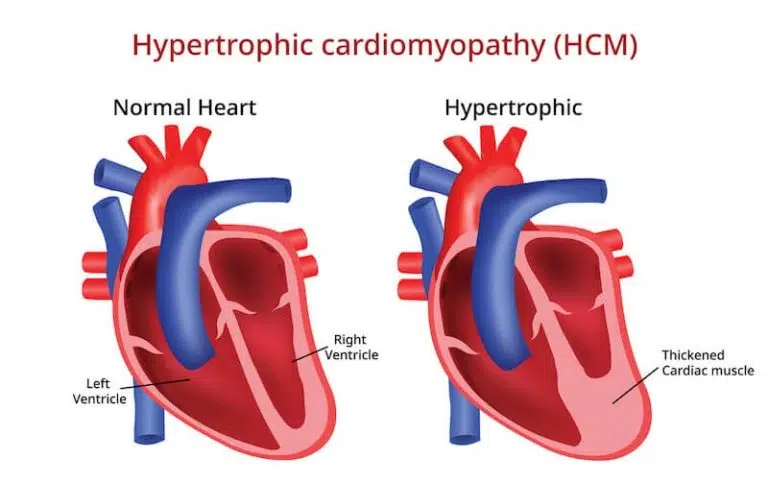
Hypertrophic Cardiomyopathy is the most common in cats. It affects pedigreed cats like British Shorthairs and many domestic shorthairs. This specific condition, also known as feline hypertrophic cardiomyopathy, is characterised by the abnormal thickening of the heart’s muscular walls, which fundamentally alters its structure and function, setting it apart from other cardiac issues.
In a healthy heart, the muscle walls contract and relax to pump blood efficiently throughout the body. In a cat with HCM, the heart muscle, a condition known as myocardial hypertrophy, becomes progressively thicker. This is particularly true for the walls of the main pumping chamber, the left ventricle. This thickening is not a sign of a strong, athletic heart; rather, it’s a pathological change that makes the muscle stiff and less pliable. This stiffness prevents the heart from relaxing properly between beats (a phase called diastole), which is critical for the heart to fill with blood before the next pump.
The primary chamber affected by HCM is the left ventricle, the workhorse of the heart responsible for pumping oxygenated blood to the rest of the body. As the ventricle walls of the left ventricle undergo left ventricular hypertrophy (LV hypertrophy), the space inside the chamber shrinks. This has two major consequences:
Reduced Filling Capacity: The smaller chamber cannot hold as much blood, so each pump circulates a smaller volume, reducing overall cardiac output.
Impaired Pumping Efficiency: The stiff, overgrown muscle cannot relax fully, leading to increased pressure inside the heart’s chambers, particularly the left atrium. This back-pressure can cause fluid to leak into the lungs (pulmonary edema) or the chest cavity (pleural effusion), leading to congestive heart failure.
This structural change disrupts normal blood flow. The turbulent flow, sometimes complicated by systolic anterior motion (SAM) of the mitral valve, significantly increases the risk of forming dangerous blood clots. It’s important to distinguish HCM from other heart conditions. For example, Dilated Cardiomyopathy (DCM) is essentially the opposite problem: the heart muscle becomes thin and weak, causing the heart to enlarge and pump feebly. While DCM was once more common due to taurine deficiencies in cat food, modern balanced diets have made it rare. HCM is a primary genetic heart disease where the muscle itself grows abnormally thick and dysfunctional, a crucial distinction for diagnosis and treatment. While any cat can develop HCM, certain breeds, including the British Shorthair, Maine Coon, and Sphinx, have a documented genetic predisposition that places them at significantly higher risk compared to the general population of domestic shorthairs.
For British Shorthairs, HCM is an inherited heart condition. This means the risk is passed down through family lines. A cat doesn’t “catch” HCM; it is born with the genetic potential to develop it. This genetic link is so strong that the prevalence of the disease is notably higher in this breed. A significant Danish study found that 8.5% of British Shorthair cats screened were HCM-positive (Reddit, 2024). The same study revealed a stark difference between sexes, noting that male British Shorthairs had a much higher occurrence of HCM (20.4%) compared to females (ResearchGate, 2025).
In breeds like the Maine Coon and Ragdoll, specific gene mutations in the MYBPC3 gene, which codes for a protein called myosin-binding protein C, have been identified as a direct cause of HCM. Scientists are still studying the exact gene mutation for the British Shorthair. There is no single commercial test yet. But the inherited pattern suggests similar genetic problems. While research is ongoing to pinpoint the exact causative genetic mutation in British Shorthairs, the strong hereditary pattern is undeniable. Responsible breeders are aware of these genetic factors and focus on screening their cats through cardiac imaging rather than relying solely on genetic markers that may not yet be identified for the breed.
Because HCM is passed through familial lines, the most powerful tool for reducing its prevalence is responsible breeding. Good British Shorthair breeders check their breeding cats for heart disease signs. They usually use an echocardiogram done by a veterinary heart specialist. They make difficult but ethical decisions to remove affected cats from their breeding programs, even if the cat appears perfectly healthy. This cardiology screening is vital for the long-term health and integrity of the breed.
While the primary form of HCM in British Shorthairs is genetic, a similar thickening of the heart wall can occur secondary to other medical issues. Conditions like systemic hypertension (high blood pressure) and hyperthyroidism can force the heart to work harder, causing the muscle to thicken in response. It is crucial for a veterinarian to rule out these other conditions, as well as others like polycystic kidney disease (PKD), during the diagnostic process to confirm a diagnosis of primary, inherited HCM.
The greatest challenge with HCM is that its early stages are asymptomatic. However, as the disease progresses, subtle and then more severe signs will begin to emerge, eventually leading to heart failure.
The calm, sometimes sedentary lifestyle of a British Shorthair makes spotting early symptoms difficult. An owner might not notice that their cat is sleeping a bit more or is less interested in a brief play session. These subtle shifts are often attributed to age or personality, allowing the heart disease to advance unnoticed.
Vigilant owners may be the first to detect a problem. Be alert for subtle breathing changes and other signs, which can include:
Tiring more quickly after short bursts of play.
Increased lethargy or spending more time sleeping or hiding.
A gradual decrease in appetite or weight loss.
Occasional coughing or wheezing that is easily dismissed.
As HCM worsens, it can lead to congestive heart failure (CHF), where fluid accumulates in or around the lungs (pulmonary oedema or pleural effusion). This is a medical emergency. The signs are much more obvious and alarming:
Rapid or Laboured Breathing: A resting respiratory rate consistently over 30-35 breaths per minute is a major red flag.
Open-Mouth Breathing or Panting: Cats do not pant like dogs; this is almost always a sign of severe respiratory distress.
Coughing: A persistent cough can be a sign of fluid build-up (pulmonary oedema).
Inability to Settle: The cat may seem restless, unable to lie down comfortably.
The two most devastating acute complications of HCM are arterial thromboembolism and sudden death.
Arterial Thromboembolism (ATE or FATE): This occurs when a blood clot, formed in the turbulent environment of the diseased heart, travels through the aorta and lodges in a smaller artery, typically cutting off blood supply to the hind legs. This event is often called a saddle thrombus. Signs include sudden paralysis of the back legs, extreme pain (vocalisation), and cold, hard back paws. ATE is a dire emergency with a poor prognosis.
Sudden Death: Tragically, for some cats, the first and only sign of severe HCM is sudden cardiac death. This is often due to a catastrophic arrhythmia (irregular heartbeat) that stops the heart with no prior warning.
Given the silent nature of HCM, proactive screening using specific diagnostic tests is the most effective strategy for early detection and management. You should have regular veterinary check-ups every year or every six months. During a physical exam, your veterinarian will use a stethoscope to listen to your cat’s heart. The presence of a heart murmur, a gallop rhythm, or an arrhythmia can be the first clue that a cardiac issue is present, prompting further investigation. Blood
pressure measurement is also a key part of a thorough examination. The definitive diagnosis of HCM is made with an echocardiogram. This is an ultrasound of the heart, a non-invasive procedure performed by a veterinarian or a veterinary cardiologist. An echocardiographic evaluation allows for direct visualisation of the heart, enabling the doctor to measure the thickness of the left ventricle walls, assess the size of the heart chambers like the left atrium, and evaluate how well the heart is functioning. This is the only way to confirm a diagnosis of HCM.
Other diagnostic tests provide valuable supporting information:
Chest X-rays: These are used to assess the overall size and shape of the heart and, crucially, to check for evidence of congestive heart failure (fluid in or around the lungs).
Electrocardiogram (ECG): An ECG records the heart’s electrical activity and is used to identify arrhythmias (atrial fibrillation), which can be a complication of HCM.
Blood Tests: Specific blood tests can be useful screening tools. A proBNP test measures a hormone that is released when the heart muscle is under strain. Elevated levels strongly suggest the need for an echocardiogram.
Breeders should do genetic testing when it is available and proven for the breed. More importantly, they should regularly screen their breeding cats with echocardiograms. This helps reduce the chance of HCM. DNA testing can identify known causative mutations in other breeds, and as research advances, it may become a more powerful tool for British Shorthairs. For owners, knowing the screening status of a kitten’s parents provides the best possible assurance of acquiring a heart-healthy cat.
While there is no cure for HCM, a diagnosis is not an immediate death sentence. Medical management can slow the disease’s progression, alleviate symptoms, and provide a good quality of life for many months or years.
The primary goals of HCM treatment are to control symptoms, reduce the risk of life-threatening complications like blood clots and congestive heart failure, and improve the heart’s overall function, particularly left ventricular diastolic function. The treatment plan is tailored to the individual cat’s stage of disease and specific clinical signs.
Several classes of drugs may be prescribed by your veterinarian:
Beta-blockers (e.g., atenolol): These help slow the heart rate and may help relax the heart muscle, allowing the ventricles to fill more completely between beats.
Diuretics (e.g., furosemide): These are essential for managing congestive heart failure. They help the body eliminate excess fluid that has accumulated in the lungs.
Anti-platelet Drugs (e.g., clopidogrel): These medications are crucial for preventing the formation of blood clots, reducing the risk of a catastrophic ATE.
ACE inhibitors (e.g., benazepril): These may be used to help control blood pressure and reduce strain on the heart in certain situations.
Calcium channel blockers may also be used to help the heart muscle relax.
Beyond medication, managing a cat with HCM involves creating a supportive environment. Minimising stress is crucial, as stress can increase heart rate and blood pressure. For cats in respiratory distress, oxygen therapy may be required in a hospital setting. This means ensuring they have a quiet, safe space and avoiding overly strenuous activities.
Cats diagnosed with HCM require lifelong monitoring. You need regular recheck appointments with your veterinarian or heart specialist. These may include repeat echocardiograms to track the disease and blood tests to check kidney function and electrolyte levels. Some heart medicines can affect these. This ongoing vet care allows for adjustments to medication as the disease progresses, ensuring the best possible management.
Your veterinarian may recommend a specific diet, often a cat food with controlled sodium levels to help prevent fluid retention. Ensuring your cat stays well-hydrated is also important. Encouraging water intake through fountains or by feeding wet food can be beneficial for overall cardiovascular health and helps support kidney function, which can be a concern with long-term medication use.
The British Shorthair is a truly special breed, but its inherent charm comes with a responsibility for vigilant health monitoring.
Hypertrophic Cardiomyopathy is a formidable and stealthy adversary, but it is one that can be managed. If you understand the genetic risk and notice small signs of illness, you can act early. By working with your vet, you can find this silent threat before it causes a crisis. Early diagnosis through an echocardiogram is the key to unlocking treatment options that can extend and improve your cat’s quality of life. As an owner, working with your veterinarian and watching your cat’s daily health are your best tools. They help protect your cat’s gentle heart. This way, you can enjoy many happy, healthy years together. Your attentiveness and proactive partnership with your veterinary team are the most powerful defences you have to protect the gentle heart of your beloved companion.