
British Shorthair Breed Standards
The British Shorthair cat, with its iconic round face, dense plush coat, and serene demeanour, has long captured the hearts of cat lovers worldwide. Originating from the rugged landscapes of Britain, this breed embodies a blend of robust physique and gentle nature, making it a cherished companion for families and a subject of dedicated breeding efforts. For those involved in preserving and promoting this distinctive breed – from seasoned breeders to enthusiastic admirers – a thorough understanding of its breed standards is paramount. These standards serve not merely as a blueprint for physical appearance but as a guide to maintaining the health, integrity, and unique character that define the British Shorthair. This comprehensive guide delves into the intricate details of the British Shorthair breed standards, offering insights into their historical evolution, the principles guiding their definition, and their practical application across various aspects of the cat’s form and temperament. We will navigate the specific criteria that distinguish a British Shorthair, from the captivating structure of its head to the substance of its body and the luxurious texture of its coat. Whether you are a breeder striving for excellence or an enthusiast seeking a deeper appreciation, this guide aims to illuminate the defining characteristics of this beloved British breed and underscore the importance of its enduring standards.
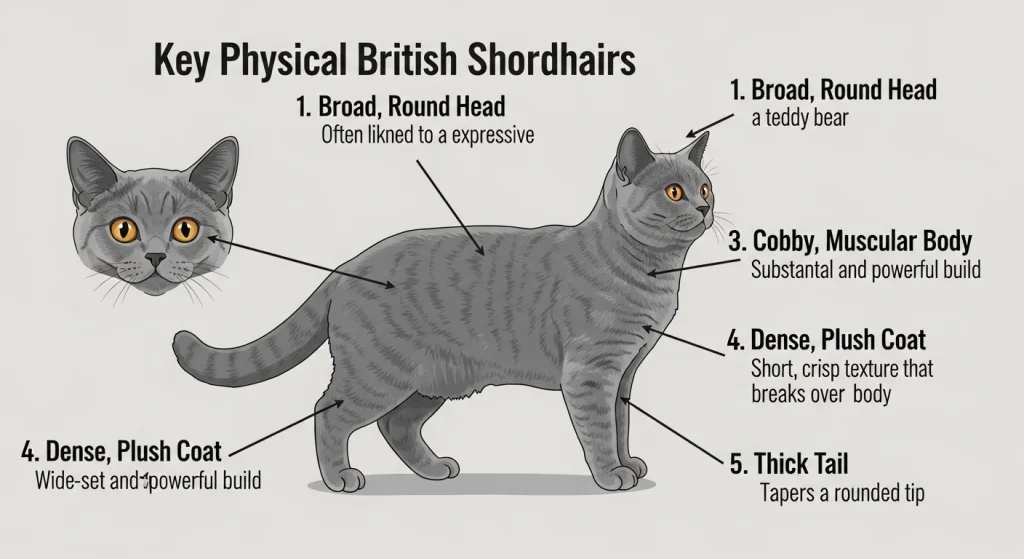
The allure of the British Shorthair is multifaceted, stemming from a combination of striking physical traits and a temperament that is both appealing and adaptable. Its most recognisable feature is undoubtedly its round face, often likened to that of a teddy bear, which conveys an impression of amiable contentment. This is complemented by large, expressive eyes that can range in colour, adding to its charming appeal. The breed’s substantial, muscular body and short, dense coat, particularly the classic blue-grey variant, further contribute to its substantial yet cuddly appearance. Beyond its aesthetics, the British Shorthair is renowned for its calm, easygoing nature. They are known for being gentle, patient, and relatively quiet, making them excellent companions for families, including those with children and other pets. Their independent streak means they can entertain themselves, yet they also form deep bonds with their human family, often content to simply be in their presence. This blend of dignified presence and affectionate, steady nature has cemented the British Shorthair’s status as a beloved icon across generations.
Breed standards are detailed descriptions that outline the ideal physical and temperamental characteristics of a specific cat breed. They are established and maintained by official cat fancier associations and serve as the benchmark for judging cats in shows and for guiding responsible breeding practices. For breeders, adhering to these standards is crucial for maintaining the genetic integrity and health of the breed, ensuring that successive generations exhibit the breed’s defining traits while avoiding exaggerated features that could compromise well-being. They provide a common language and a shared vision for the breed’s future. For enthusiasts, understanding breed standards offers a deeper appreciation for the nuances that make a British Shorthair distinct and allows for a more informed selection of a pet. The standard is, in essence, the breed’s identity document, safeguarding its heritage and guiding its development.
This guide is meticulously crafted to serve both the dedicated breeder and the passionate enthusiast. For breeders, it offers a deep dive into the precise specifications of the breed standard, highlighting areas of focus for breeding programs, genetic considerations, and the pursuit of optimal type. It aims to provide actionable insights for responsible reproduction. For enthusiasts, the guide serves as an educational tool, illuminating the key features to look for when appreciating a British Shorthair, whether in a show hall or as a potential pet. It provides context for the breed’s history, its defining physical traits, and its characteristic temperament, fostering a richer understanding and appreciation. By exploring each facet of the standard, from head to tail and temperament to health, we aim to equip all readers with comprehensive knowledge of what defines an exemplary British Shorthair.
The history of the British Shorthair is intrinsically linked to the British Isles, where this hardy breed developed over centuries. Believed to have been brought to Britain by the Romans, these cats were originally valued for their exceptional hunting skills, their dense coats providing protection against the damp, cold climate. For a long time, they were simply referred to as the “British cat,” a distinct, sturdy working cat found throughout the country. Their robust nature and calm disposition made them ideal companions for households, not just as pest controllers but also as steadfast members of the family. The evolution from a common farm and house cat to a pedigreed breed was a gradual process, driven by an increasing interest in categorising and showcasing feline breeds. The unique characteristics that emerged from their natural development, including their substantial build and dense hair, began to be recognised and valued.
The late 19th century marked a pivotal time in the formal recognition of cat breeds, largely thanks to the efforts of Harrison Weir, often hailed as the father of the cat fancy. Weir was instrumental in organising the first major cat show at the Crystal Palace in London in 1871. At this seminal event, the distinctive traits of the British cat were showcased, distinguishing them from other breeds that were beginning to gain attention. Weir’s advocacy and the popularity of these early cat shows helped to solidify the concept of a breed standard for the British Shorthair. The breed was appreciated for its inherent qualities: its solid structure, its distinctive round head, and its luxurious, protective coat. This period laid the groundwork for formal breed registries and the development of specific breed standards that would guide future breeding and show decisions, distinguishing the British Shorthair as a unique and admired feline entity.
The British Shorthair breed faced significant challenges throughout the tumultuous periods of the two World Wars. During World War II, in particular, the breed’s population dwindled dramatically due to wartime disruptions and food shortages. To prevent the breed from disappearing entirely, breeders were forced to outcross with other breeds, most notably Persians and later, Russian Blues and Chartreux. These outcrosses, while essential for the breed’s survival, introduced new genetic variations. Post-war, the focus shifted to rebuilding the British Shorthair population and re-establishing its distinctive characteristics. Breeders worked diligently to select for the original robust type, the cobby body, and the characteristic round head, while simultaneously working to refine the coat texture and variety of colours. This concerted effort over generations helped to preserve the core essence of the British Shorthair, ensuring that its unique breed standard remained identifiable and robust, a testament to the dedication of its custodians.
The resilience shown through challenging historical periods has paid off, and today the British Shorthair is a globally recognised and adored breed. It is consistently ranked as one of the most popular pedigree breeds in its native Britain, a testament to its enduring appeal. Its popularity has also surged significantly in other parts of the world, including the United States, where it ranks among the top breeds. This widespread acceptance is a reflection of its adaptable nature and its suitability as a companion animal for diverse households. Generations of careful breeding have solidified its desirable traits, ensuring that cats seen today in the UK, exhibit the consistent type and temperament that define the breed. The continued popularity of the British Shorthair across different countries and among multiple generations speaks volumes about its timeless charm and its ability to integrate seamlessly into modern family life.
A breed standard is a comprehensive document detailing the precise criteria that define an ideal representative of a particular cat breed. For the British Shorthair, this encompasses a wide array of physical attributes and temperament expectations. Physically, the standard meticulously describes the head shape, including the ideal roundness, fullness of cheeks, and proportions of the muzzle, nose, and chin. It specifies the desired size, shape, and placement of the eyes, along with their colour requirements, which are often dictated by the coat colour. Ear set and size are also detailed, contributing to the overall facial structure. The standard further defines the body type, emphasising a cobby, muscular build with strong bone structure, a broad chest, a short, thick neck, and substantial legs and paws. The coat is described in terms of its length, density, and texture, along with an extensive list of acceptable colours and patterns. Beyond physical form, temperament is a critical component, detailing the breed’s characteristic calm, affectionate, and patient nature. These elements collectively paint a detailed picture of the breed’s ideal form and function.
Breed standards are indispensable tools for preserving the purity and health of a cat breed. They provide a defined framework that breeders and judges use to evaluate cats, ensuring that breeding programs focus on desirable traits and avoid problematic exaggerations. By adhering to a standard, breeders contribute to the genetic diversity and health of the gene pool, helping to prevent hereditary diseases that can arise from inbreeding or the pursuit of extreme features. The standard also ensures consistency, so that a cat identified as a particular breed possesses the predictable characteristics associated with it. This consistency is vital for breed recognition by official organisations and for maintaining the eligibility of cats for registration within pedigree systems. A well-defined and consistently applied standard safeguards the breed’s heritage, ensuring its distinctive qualities are passed down through generations, and ultimately contributes to the overall welfare of the cats themselves.
The definition and enforcement of breed standards for the British Shorthair, like other pedigree cats, fall under the purview of major feline governing bodies. In its native Britain, the primary authority is the Governing Council of the Cat Fancy (GCCF). The GCCF sets the official breed standard for the British Shorthair in the UK, detailing specific requirements for conformation, coat, colour, and temperament. In the United States, the Cat Fanciers’ Association (CFA) is a leading organisation that also maintains a distinct standard for the breed but not like in UK. While there can be slight variations in the specific wording or emphasis between the GCCF and CFA standards, both aim to preserve the core characteristics of the British Shorthair: its robust build, distinctive head shape, dense coat, and amiable nature. Understanding the standards set by these key organisations is essential for breeders and enthusiasts participating in shows or engaged in breeding programs within their respective regions.
Within any pedigree breed, including the British Shorthair, there is a distinction between “pet quality” and “show quality.” Cats considered show quality meet the breed standard in virtually all aspects and are eligible to compete in cat shows. They possess the ideal conformation, type, coat, and temperament, with minimal or no disqualifying faults. Pet quality, on the other hand, refers to cats that, while still pure-bred and possessing the essential characteristics of the breed, may have minor deviations from the strict show standard. These deviations do not affect the cat’s health, temperament, or its suitability as a beloved companion. For instance, a pet-quality cat might have a slight variation in eye colour relative to its coat, a less pronounced head structure, or a minor bite fault. These cats make wonderful pets, offering the breed’s characteristic charm and nature, but they are not typically intended for breeding or exhibition at the highest competitive levels.
The head of the British Shorthair is arguably its most defining feature, contributing significantly to its endearing “teddy bear” appearance. The standard calls for a broad, massive, and round skull, giving the impression of a perfect sphere. This roundness should be evident from the front and in profile. A crucial element of this structure is the full-cheeked appearance, particularly pronounced in adult males due to hormonal influences, which enhances the overall roundness. These full cheeks are supported by strong jaw muscles and well-developed whisker pads, which add to the facial fullness and definition. The overall effect is a head that is substantial and powerful yet undeniably soft and approachable, a key characteristic that captivates admirers of the breed.
The forehead of the British Shorthair should exhibit a gentle, smooth curvature, seamlessly blending into the skull without a pronounced stop. There should be no flatness or angularity. This smooth dome is essential for the characteristic rounded appearance. The muzzle is broad and full, contributing to the overall squarish impression of the face. It should be well-defined, neither fine nor pointed, supporting the strong jawline. The transition from the muzzle to the cheeks should be smooth, maintaining the full-cheeked look without appearing coarse. The whisker pads are prominent, framing the muzzle and further emphasising its fullness. This combination of a rounded forehead and a defined, broad muzzle is critical for achieving the quintessential British Shorthair expression.
The nose of the British Shorthair should be broad and of medium length, with a slight, gentle dip or curvature, but without a pronounced break or stop. It should align well with the full muzzle and chin. The chin should be deep and strong, indicating a well-developed jawline, and should align vertically with the nose, forming a straight line in profile. A weak or receding chin is considered a fault. The overall proportions of the nose and chin are vital for creating the breed’s characteristic profile. They must complement the round head and full cheeks, contributing to the cat’s balanced and substantial appearance. The goal is a face that is powerful and rounded, embodying the breed’s robust nature.
The eyes of the British Shorthair are a prominent feature, contributing significantly to its captivating expression. They should be large, round, and set well apart, contributing to the broad, open look of the face. The placement should be wide-set, aligning with the overall roundness of the head. The large, round shape gives the eyes a wide-eyed, innocent, and appealing appearance. They should be open and expressive, free from any almond or oriental shape. The depth of set should be moderate, neither too deep nor too shallow, ensuring that the roundness is emphasised. The overall impression of the eyes is one of openness, innocence, and an alert yet gentle intelligence, a key component of the breed’s charm.
The colour of the British Shorthair’s eyes is critically important and is expected to be deep, rich, and clear, ideally harmonising with the cat’s coat colour. For the classic blue British Shorthair, the standard specifies a deep, rich copper or gold. This striking contrast between the blue coat and the intense eye colour is one of the breed’s most iconic features. However, eye colour can vary across the wide spectrum of British Shorthair colours and patterns. For example, in silver-tabby varieties, green eyes are preferred. In point-coloured British Shorthairs, vivid blue eyes are standard. The requirement for intense, clear eye colour, regardless of hue, is crucial for the breed’s overall appeal and the expressiveness of its face. The colour should be uniform and free from any flecks or cloudiness.
The ears of the British Shorthair are intentionally small to moderate in size, fitting the overall proportions of the large, round head. They should be set well apart, contributing to the width of the skull, and should be well-furnished, meaning they have a good amount of fur. The tips of the ears should be rounded, avoiding any pointed or sharp contours. The base of the ear should be broad, and the ear should sit upright and appear to be an integral part of the head’s overall rounded shape. The placement and size of the ears are crucial in maintaining the distinctive, slightly “tucked in” look that contributes to the breed’s gentle expression. They should not be large or overly erect, which could detract from the characteristic softness of the head.
For breeders, achieving the correct head type for the British Shorthair involves a deep understanding of genetics and careful selection. The roundness, fullness of cheeks, and broad muzzle are key to establishing “type.” Breeders must study pedigrees to identify lines that consistently produce these features. Genetic predispositions for head structure are complex; however, a history of strong, broad-headed cats in a bloodline is a good indicator. It is crucial to avoid exaggerating any single feature to the detriment of others, as balance is paramount. For instance, while full cheeks are desired, they should not impede breathing or drinking. Breeders must also consider the expression the head creates – it should be sweet and contented, not aggressive or severe. Regular evaluation of breeding stock against the standard, focusing on these foundational head characteristics, is essential for maintaining and improving breed type over generations.
Enthusiasts often find themselves drawn to the British Shorthair’s incredibly expressive face, particularly the subtle upturn at the corners of its mouth, which conjures the enigmatic smile of the Cheshire Cat from Lewis Carroll’s Alice’s Adventures in Wonderland. While not a literal smile, this impression is created by the combined features of the full cheeks, the round eyes, and the slightly rounded muzzle. The iconic expression conveys a sense of serene contentment and gentle wisdom. This captivating look, so artfully illustrated by John Tenniel in the original book, is a hallmark of the breed and a key part of its charm. Appreciating this subtle nuance requires observing the cat’s overall facial structure and how its eyes and mouth seem to form this characteristic, heart-warming expression, making it truly unforgettable.
The British Shorthair is characterised by a decidedly cobby and robust body type. This conformation signifies a cat of medium to large size, built for strength and substance rather than svelte grace. The body is compact, well-muscled, and deep-chested, conveying an impression of power and resilience. This sturdy build is a direct reflection of the breed’s origins as a hardy working cat, requiring stamina and strength to thrive in its native climate. The overall outline is one of solidity and presence, without being overly bulky or heavy. The body should appear well-balanced and proportionate to the cat’s substantial head and sturdy legs, presenting a picture of compact power and good health. This robust physique is a defining characteristic that distinguishes the British Shorthair from more slender breeds.
Complementing the cobby body type is a foundation of strong bone structure and well-developed musculature. The bones are thick and substantial, providing the frame for a muscular physique. This is not a delicate breed; its build suggests inherent strength and a capacity for vigorous activity, even though their temperament is typically calm. The musculature should be firm and well-defined, particularly visible in the chest, shoulders, and hindquarters, contributing to the cat’s solid feel and powerful presence. This combination of dense bone and developed muscle ensures the British Shorthair possesses the physical resilience for which it is known, contributing to both its impressive appearance and its overall health and well-being throughout its life.
The chest of the British Shorthair is broad and deep, an indication of lung capacity and overall robustness. This broadness extends to the shoulders, which are powerful and well-developed, fitting seamlessly into the body’s overall compact structure. The front legs should appear sturdy and straight when viewed from the front, continuing the line of the broad shoulders. The powerful chest and shoulder structure are essential components of the breed’s cobby conformation, emphasising its strength and substance. This provides a solid base for the cat’s movement and presence, contributing to its dignified and substantial appearance.
The neck of the British Shorthair is typically short, thick, and strong, fitting harmoniously with the broad head and deep chest. It is not long or slender but rather muscular and substantial, reinforcing the breed’s overall impression of power and solidity. This short, strong neck supports the large, round head effectively, preventing it from appearing disproportionate or unbalanced. It contributes to the breed’s compact silhouette and adds to the overall robust and grounded appearance. The neck should flow smoothly into the shoulders and chest, maintaining the continuous line of the breed’s solid conformation.
The British Shorthair is a medium to large-sized breed, with a noticeable difference in size between males and females. Adult males are significantly larger and heavier than females, typically weighing between 6-10 kilograms. Females are considerably smaller, usually falling within the 4-6 kilogram range. However, some exceptionally well-built males can exceed 10 kilograms. This size difference is a natural characteristic of the breed, reflecting sexual dimorphism. It is important for breeders and enthusiasts to understand these typical ranges to accurately assess a cat’s conformation against the breed standard, recognising that substantial size is a desirable trait in males, contributing to their impressive presence.
The coat of the British Shorthair is one of its most defining and tactile characteristics. It is short, exceptionally dense, and possesses a crisp, plush texture that stands away from the body, giving the cat a substantial, well-insulated appearance. This dense coat, with a thick undercoat, is a remnant of the breed’s origins as a hardy cat suited to Britain’s climate. The texture should feel firm and springy to the touch, resisting being easily flattened or parted. It should not be silky, fine, or long, which would be considered a fault. The overall appearance of the coat is one of luxurious thickness and resilience, contributing significantly to the breed’s iconic, cuddly look. While the classic “Blue” (a solid, even grey-blue) is perhaps the most iconic and historically significant color, the British Shorthair is recognised in a vast array of colours and patterns. The breed standard accepts virtually all recognised cat colours, provided they are pure and clear. This includes solid colours such as black, white, cream, and various shades of red and chocolate. Bicolours (white combined with another colour) are also popular. Beyond solids and bicolours, the British Shorthair can be found in tabby patterns (classic, mackerel, spotted, ticked), tortoiseshell, and colourpoint variations. Each colour and pattern must adhere to specific guidelines for clarity, purity, and correct expression to be considered within the breed standard. The diversity in coat colour and pattern adds to the breed’s widespread appeal.
Breeders of British Shorthairs must possess a solid understanding of feline genetics, particularly concerning coat colour and pattern inheritance. This knowledge is crucial for making informed breeding decisions to produce cats that conform to the standard while also promoting genetic diversity. Understanding how genes for colour, pattern, and coat texture are passed down allows breeders to plan matings effectively. For example, breeding for specific rare colours or patterns may require knowledge of recessive genes or linkage. Simultaneously, maintaining the breed’s characteristic coat density and texture requires careful selection. Breeders should aim to preserve the desirable qualities of the coat while also exploring the wide range of acceptable colours and patterns, ensuring the breed remains vibrant and adaptable.
For enthusiasts, the British Shorthair’s coat offers a unique tactile pleasure. Its plush, dense feel is deeply satisfying, inviting petting and interaction. Beyond the feel, the sheer variety of colors and patterns is fascinating. Whether one is drawn to the timeless elegance of the Blue, the bold markings of a Tabby, or the striking contrast of a Bicolour, there is a British Shorthair to capture almost any preference. Appreciating the coat involves recognising its quality – its density, its feel, and the richness of its colour or pattern. Each variation offers a distinct visual appeal, contributing to the breed’s overall popularity and the joy it brings to its admirers.
The temperament of the British Shorthair is consistently described as calm, stable, and affectionate, earning it the nickname “gentle giant.” This breed is known for its even-keeled disposition; they are rarely overly demanding or boisterous. While they enjoy human companionship and form strong bonds with their families, they also possess an independent streak, content to entertain themselves or simply relax nearby. They are not typically prone to excessive vocalisation and generally maintain a dignified, serene presence. This predictable and amiable nature makes them exceptionally well-suited for a variety of home environments, including those with children or other pets, provided proper introductions and socialisation occur. The inherent gentleness and patience of the British Shorthair make it an outstanding family pet. They are known to be tolerant of children, often forming gentle bonds with them, and are usually unfazed by the typical noise and activity of a household. Their sturdy build means they can withstand some playful handling (with supervision, of course), and their placid nature ensures they are not easily startled or prone to aggression. They are also generally good with other animals, including dogs and other cats, provided they are introduced appropriately and have positive early experiences. Their ability to adapt to different family dynamics contributes significantly to their enduring popularity as beloved household companions.
For breeders, temperament is as crucial as physical conformation. A pedigree British Shorthair should exhibit a calm, confident, and friendly disposition. Breeders have a responsibility to select breeding stock not only for their physical traits but also for their stable temperaments. Early socialisation of kittens is paramount; exposing them to various sights, sounds, and gentle handling from a young age helps them develop into well-adjusted adults. Breeders should observe the interactions between parent cats and kittens, ensuring a calm and nurturing environment. Any signs of undue nervousness, aggression, or extreme shyness should be a serious consideration in breeding decisions. Prioritising temperament ensures that each British Shorthair continues to embody the breed’s reputation as a delightful and reliable companion.
Enthusiasts looking to bring a British Shorthair into their lives can expect a devoted, yet not overly clingy, companion. These cats typically settle into their new homes with ease, adapting to routines and family life. They enjoy gentle play, often with interactive toys, but also appreciate quiet time and naps in sunny spots. Their calm demeanour means they are less likely to be destructive or constantly seeking attention, making them ideal for busy households or individuals seeking a more relaxed feline presence. A well-bred British Shorthair will be curious, affectionate, and generally easy to manage, offering a constant source of quiet companionship and endearing charm.
While the British Shorthair is generally a robust and healthy breed, like all pedigrees, they are predisposed to certain genetic conditions. The most commonly cited concerns are Hypertrophic Cardiomyopathy (HCM) and Polycystic Kidney Disease (PKD). HCM is a heart condition that can affect many breeds, and a Danish study indicated that 20.4% of male British Shorthairs and 2.1% of females had HCM. PKD is a kidney disease, and while less common than in some Persian lines, it is still a potential concern for the breed. Responsible breeders proactively screen their breeding stock for these conditions to minimise their occurrence in future generations. Beyond these, they are not prone to many other serious hereditary health issues, contributing to their overall good health.
The cornerstone of maintaining the health of the British Shorthair breed lies with responsible breeders. This includes a commitment to genetic screening and health testing of breeding cats. For PKD, DNA testing is available, allowing breeders to identify carriers or affected individuals. For HCM, regular cardiac screening by a veterinary cardiologist using echocardiography is recommended for breeding cats, especially males. Breeders should maintain thorough health records and be transparent about the health status of their cats and their lineage. Adhering to the guidelines set by veterinary associations and breed clubs regarding health testing is not just ethical but essential for preserving the breed’s vitality and ensuring that future generations of British Shorthairs are as healthy as possible.
The British Shorthair is known for its impressive longevity. With proper care, nutrition, and regular veterinary check-ups, these cats can live for a considerable number of years. The average lifespan of a British Shorthair cat is typically 12-20 years, with many living well into their late teens and beyond. This long lifespan makes them a significant commitment, but also means owners can enjoy many years of companionship with these wonderful cats. Maintaining a healthy weight, providing a balanced diet, engaging in moderate exercise, and ensuring prompt veterinary care for any health issues will all contribute to helping your British Shorthair live a long, happy, and healthy life.
Understanding the financial commitment associated with owning a British Shorthair is essential for prospective owners. The initial purchase price for a pet-quality British Shorthair kitten typically ranges from £1000 to £1500, while breeder or show-quality kittens can command a higher price, ranging from £1500 to £2500. These costs reflect the dedication and investment breeders put into health testing, quality nutrition, and responsible breeding practices. Beyond the initial acquisition, ongoing expenses are also considerable. Expect to spend anywhere from £100–£150 per month on your British Shorthair cat, including food, medical care, treats, and litter. Annually, these ongoing costs for owning a British Shorthair average, encompassing routine veterinary care, high-quality nutrition, and essential supplies.
The British Shorthair breed standard is more than a mere set of rules; it is a living document that reflects the breed’s rich history, its distinctive physical attributes, and its cherished temperament. From its hardy origins in Britain to its current status as a globally beloved feline, the breed has been carefully shaped and preserved through generations of dedicated breeding. Understanding the nuances of its round head, robust cobby body, plush coat, and gentle nature is key for both breeders striving for excellence and enthusiasts seeking to appreciate this remarkable cat. For breeders, the standard provides the blueprint for maintaining breed integrity, prioritising health through rigorous genetic screening and testing, and ensuring that each generation embodies the true spirit of the British Shorthair. The commitment to understanding genetics, temperament, and the finer points of conformation is vital for the continued success and well-being of the breed. For enthusiasts, a deep appreciation of these standards enhances the joy of owning or admiring a British Shorthair, allowing for a richer understanding of its unique characteristics. Ultimately, the enduring appeal of the British Shorthair lies in the harmonious blend of its classic good looks and its steady, affectionate nature.
By upholding the breed standards, we ensure that this “gentle giant” continues to grace homes with its dignified presence and unwavering companionship for many years to come, a testament to its timeless charm and the dedication of those who cherish it.