Cat in Heat: How Long It Lasts, Key Signs, and Essential Care Tips for Owners
When your normally quiet and composed feline companion suddenly transforms into a loud, restless, and overly affectionate creature, it can be both confusing and concerning. This dramatic shift in behaviour often signals that your cat is “in heat.” For unprepared owners, this natural biological process can be a challenging period filled with yowling, escape attempts, and the constant worry of an unwanted pregnancy. Understanding what’s happening to your cat, how long it will last, and how you can help is crucial for navigating this phase with confidence and care.
This comprehensive guide will demystify the feline heat cycle, equipping you with the knowledge to recognise the key signs, manage the behaviours, and make the best long-term health decisions for your pet.
A cat “in heat,” scientifically known as being in estrus, is experiencing the fertile period of her reproductive cycle. Driven by a surge of hormones, her body is preparing for mating and potential pregnancy. This is not an illness or a behaviour problem; it is a fundamental part of an unsprayed female cat’s life. Recognising this allows owners to respond with patience and effective management strategies rather than frustration.
The feline reproductive cycle, or estrous cycle, is a complex sequence of events governed by hormones and environmental cues, primarily the length of daylight. Unlike humans, cats are “seasonally polyestrous,” meaning they experience multiple heat cycles during the warmer, longer days of the year, typically from spring through fall.
The term “in heat” refers specifically to the estrus stage of the cycle. This is the time when the female cat is receptive to mating and is at her peak fertility. All the distinct behaviour associated with heat the vocalisations, the specific postures, the intense affection, are her body’s way of signalling to male cats that she is ready to conceive.
A female cat reaches sexual maturity, or puberty, and experiences her first heat cycle much earlier than many owners expect. Most cats will have their first heat between five and nine months of age. However, this can vary significantly based on breed, time of year, and individual development. Some kittens can enter heat as early as four months old.
The entire estrous cycle is composed of several distinct phases:
- Proestrus: This is the preparatory stage leading up to heat, lasting one to two days. During this time, hormone levels begin to rise, but the cat is not yet receptive to mating and may show only subtle signs like increased affection.
Estrus: This is the active “heat” period. The cat is now fertile and actively seeking a mate. This phase is characterised by the most obvious behavioural signs and can last anywhere from three to fourteen days, with an average of about a week.
Interestrus: This is the period between heat cycles if the cat does not mate. It can be as short as two to three weeks, meaning an unsprayed female can go back into heat very quickly.
Metestrus (or Diestrus): If mating occurs and the cat ovulates, she enters this phase. If pregnancy results, it lasts for the duration of the gestation (about two months). If pregnancy does not occur, this stage lasts for about 30 to 40 days before she may cycle again.
Anestrus: This is the dormant phase of the reproductive cycle, typically occurring during the shorter daylight hours of late fall and winter. During anestrus, the ovaries are inactive, and there are no heat cycles.
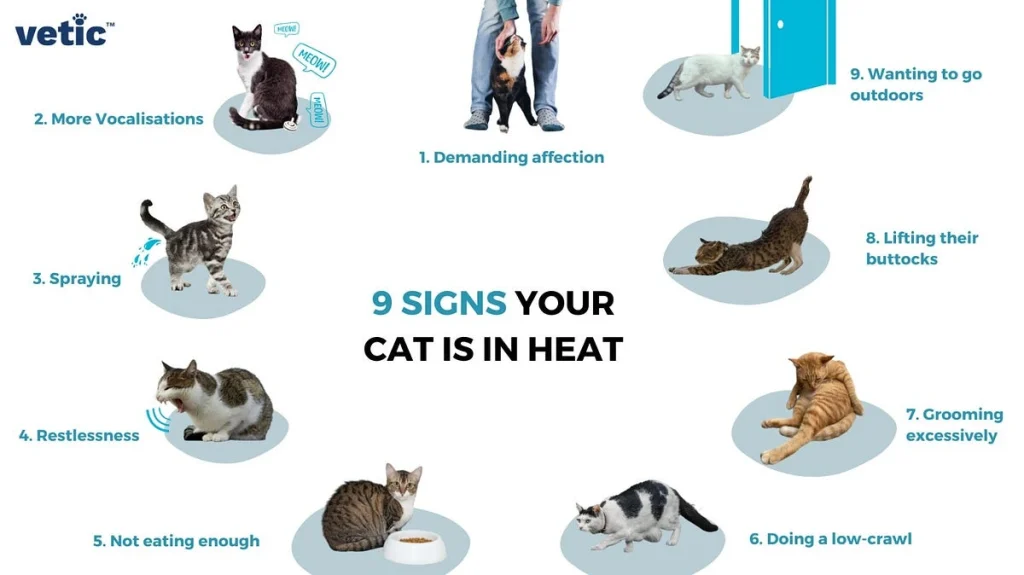
Recognizing the signs of estrus is the first step to managing the situation effectively. The changes are primarily behavioural and can be quite dramatic.
One of the most noticeable and often disruptive signs is a significant increase in vocalisation. Your cat may produce loud, persistent meows or yowls that can sound like she is in pain. This is her mating call, designed to attract male cats from a wide area. This calling can happen at any time, day or night.
A cat in heat often becomes extremely affectionate and demanding of attention. She may rub against you, furniture, and other objects more frequently and intensely. This is coupled with a sense of restlessness; she may pace, seem unable to get comfortable, and constantly weave between your legs.
When you pet a cat in heat, particularly on her lower back, she will likely adopt a specific mating posture known as lordosis. She will lower her front end, raise her hindquarters, and move her tail to the side. This instinctual position facilitates mating and is a clear indicator that she is in the estrus phase.
To advertise her availability to males, a female in heat may begin spraying small amounts of urine on vertical surfaces around the home. This urine contains hormones and pheromones that signal her reproductive status. While more common in male cats, this marking behaviour can also be a prominent sign of heat in females.
Unlike dogs, cats do not typically experience noticeable bleeding during their heat cycle. A common misconception is that there will be visible blood, but this is not the case. Some cats may have a very mild, clear vaginal discharge, but any significant or coloured discharge is abnormal and warrants a call to your veterinarian. You may also notice her grooming her genital area more frequently.
The timeline of a cat’s heat can feel unpredictable, but understanding the general patterns can help you prepare.
The estrus phase itself, the period of active heat, typically lasts for about seven days. However, this is just an average, and the duration can range from as short as three days to as long as fourteen. The intensity of the signs may also wax and wane throughout this period.
If a female cat is not spayed and does not mate during her estrus phase, she will enter the interestrus period for roughly two to three weeks before her body prepares for another heat cycle. This means she can go into heat repeatedly throughout the entire breeding season, which can be exhausting for both the cat and her owner.
A crucial aspect of feline reproduction is that cats are “induced ovulatory.” This means that the act of mating itself stimulates the ovaries to release eggs. If a cat in heat does not mate, she will not ovulate. This biological mechanism is why she can cycle back into heat so quickly, her body is ready to try again.
Managing a cat in heat primarily involves ensuring her safety, providing comfort, and preventing an unwanted pregnancy.
Your number one priority is to keep your cat securely indoors. A female in heat is driven by an overwhelming instinct to mate and will go to great lengths to escape. She can attract unneutered male cats from a surprising distance. Ensure all windows, doors, and even small pet flaps are securely closed and locked. Do not underestimate her determination.
While her behaviour may be frustrating, remember that it is driven by hormones she cannot control. Provide a comfortable, safe space for her to retreat. A warm heating pad or a soft blanket can be soothing. Extra gentle petting and brushing can also help satisfy her need for physical contact, though be mindful of petting her lower back if it overstimulates the lordosis posture.
Help your cat expend some of her restless energy through positive outlets. Engage her in more frequent and vigorous play sessions with interactive toys like feather wands or laser pointers. Food puzzles and other enrichment activities can also provide mental stimulation and a welcome distraction.
Synthetic feline pheromone diffusers or sprays can help create a more calming environment and may reduce stress-related behaviours but us we do not recommand. These products mimic the natural pheromones cats use to feel safe and secure. While not a cure, they can be a helpful supportive measure.
The constant yowling can be difficult to handle, but scolding your cat is ineffective and will only cause her stress. Try to meet her needs for affection with calm reassurance. Sometimes, simply sitting with her and speaking in a soft voice can provide comfort.
Since your cat may be rolling on the floor frequently and potentially marking with urine, it’s important to keep her environment clean. Ensure her litter box is scooped daily and provide clean, comfortable bedding. This helps maintain a hygienic space and can reduce your own stress.
Understanding the biological drivers behind your cat’s behaviour can foster greater empathy and patience.
The entire estrous cycle is orchestrated by reproductive hormones. As daylight hours increase, the brain signals the ovaries to start producing estrogen. It is this rising level of estrogen that triggers the physical and behaviour signs of proestrus and estrus. These hormones are powerful, dictating her every instinct during this time.
The trait of being seasonally polyestrous is an evolutionary advantage. It ensures that kittens are born during warmer months (spring and summer) when food is more plentiful and their chances of survival are highest. This biological clock is finely tuned to environmental light cues.
Every behaviour your cat exhibits during estrus is geared towards one goal: attracting a mate and reproducing. The yowling, rubbing, and posturing are all innate, hormone-driven signals designed to ensure the continuation of her species. This instinct is incredibly powerful and is the primary reason containment is so critical.
While the above tips can help you manage a heat cycle, they are temporary solutions. The most effective, responsible, and humane way to prevent heat cycles and their associated challenges is to have your cat spayed.
Spaying is a routine surgical procedure performed by a veterinarian where the cat’s reproductive organs, the ovaries and uterus are removed. This permanently prevents her from going into heat, ovulating, and becoming pregnant. The procedure offers numerous health and behaviour benefits that extend far beyond simply preventing litters of kittens. Most veterinarians recommend spaying before the first heat cycle, around five to six months of age.
Spaying provides significant long-term health advantages. It eliminates the risk of uterine infections like pyometra, a life-threatening condition, and removes the risk of ovarian and uterine cancers. Furthermore, spaying a cat before her first heat cycle dramatically reduces her risk of developing mammary (breast) cancer later in life. It also eliminates the stressful behaviour associated with heat, leading to a calmer and more content companion.
Navigating your cat’s first heat cycle can be an intense experience, but it’s a manageable one. By understanding that this is a natural, hormone-driven process, you can respond with effective care and patience. Recognising the key signs from persistent vocalisations and restlessness to the distinctive lordosis posture allows you to take immediate action to ensure her safety and comfort. Key management strategies include strict indoor containment to prevent unwanted pregnancy, providing environmental enrichment and comfort, and maintaining impeccable hygiene.
Ultimately, while these tips provide temporary relief, the most responsible and beneficial long-term solution is spaying. This routine procedure not only prevents future heat cycles and unwanted litters but also offers profound health benefits, protecting your cat from life-threatening cancers and infections.
If your cat is not yet spayed, the best next step is to schedule a consultation with your veterinarian. They can provide personalised advice on the optimal timing for the procedure and answer any questions you may have, setting you and your feline friend on a path to a healthier, happier life together.