
Staging and Treating FeLV and FIV in British Shorthairs
A diagnosis of Feline Leukaemia Virus (FeLV) or Feline Immunodeficiency Virus (FIV) can be daunting for any cat owner. For those devoted to their British Shorthairs, a breed known for its robust health and calm demeanour, the news can be particularly concerning. These two retroviruses affect the immune system in similar ways. However, they have different challenges in transmission, prognosis, and management. While widespread vaccination and testing have significantly reduced the prevalence of some of these diseases, Feline Leukaemia Virus is now thought to infect less than 1% of cats in the UK.
This guide is specifically designed for UK-based British Shorthair owners. It covers initial diagnosis, staging, and practical treatment strategies. This will help you manage the journey and ensure the best quality of life for your companion.
British Shorthairs are beloved for their placid, affectionate nature and sturdy build. They are typically indoor cats or have limited, supervised access to the outdoors, which can influence their risk of exposure to certain diseases. Their close-knit bonds with their families mean that a health diagnosis impacts the entire household. Knowing their specific lifestyle and temperament is important when making a management plan for chronic conditions like FeLV or FIV.
This guide focuses on UK-specific information. We will discuss how common these viruses are in the United Kingdom. We will also cover the diagnostic tests and vaccines your local vet offers. Finally, we will explain the common management protocols used here. This ensures the advice you receive is relevant, practical, and aligned with current UK veterinary standards.
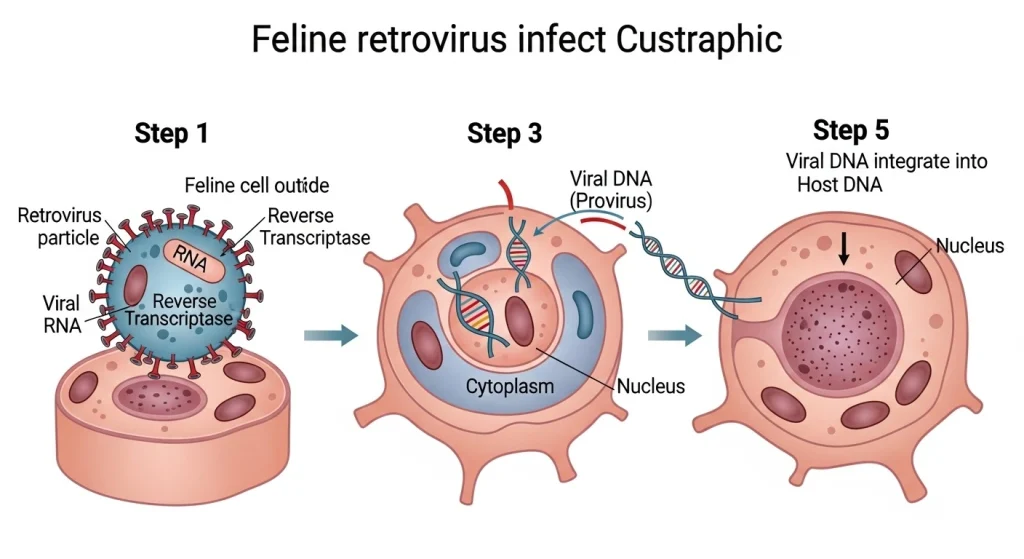
FeLV and FIV are both classified as retroviruses, a type of virus that inserts a copy of its own genetic material into the DNA of the cells it infects. They achieve this using a unique enzyme called reverse transcriptase, which converts their viral RNA into DNA. This new virus DNA (proviral DNA) is then integrated into the host cell’s genome, allowing the virus to persist for the life of the animal. While both can lead to severe illness, they are distinct viruses with different structures, transmission methods, and disease progressions.
The feline leukaemia virus (FeLV) is a retrovirus that primarily spreads through close, social contact. It can cause a range of serious health problems by suppressing the immune system, leading to anaemia by affecting red blood cells, and is a leading cause of cancer in cats. The virus infects various cells, but its most profound impact is on the white blood cells, which are essential for a healthy immune response. A persistent FeLV infection can severely compromise a cat’s ability to fight off other diseases.
Feline immunodeficiency virus (FIV) is often compared to HIV in humans but is strictly feline-specific and cannot be transmitted to people. This retrovirus causes a slowly worsening feline immunodeficiency. While it weakens the immune system over time, many cats with FIV can live long, relatively healthy lives with proper care. It primarily targets specific types of white blood cells known as T-helper cells (CD4+ lymphocytes), gradually crippling the body’s ability to coordinate an effective immune defence.
Both viruses cause immunosuppression. They fundamentally work by attacking and destroying the very cells designed to protect the body from infection. This weakened immune response leaves the cat vulnerable to secondary bacterial, viral, fungal, and protozoan infections that a healthy cat could easily fight off. This is why many symptoms associated with FeLV and FIV are not caused by the retrovirus itself, but by these opportunistic infections that take hold due to immune system suppression.
Feature | Feline Leukaemia Virus (FeLV) | Feline Immunodeficiency Virus (FIV) |
|---|---|---|
Primary Transmission | Saliva (grooming, shared bowls), bites, milk | Deep bite wounds (fighting) |
Typical Onset | Can be rapid, especially in kittens | Slow, with a long asymptomatic period |
Primary Diseases | Lymphoma, leukaemia, anaemia, immunosuppression | Recurrent infections (dental, respiratory), immunosuppression |
Prognosis | Generally more guarded, variable by stage | Often good, many cats live normal lifespans |
Prevention | Effective vaccine available in the UK | No FIV vaccine available in the UK |
Understanding how these viruses spread is the first step in protecting your cat. The different transmission routes for FeLV and FIV dictate distinct prevention strategies.
FeLV is shed in high quantities in saliva. The most common transmission route is through mutual grooming, sharing food and water bowls, and using the same litter trays. It can also be passed from a mother to her kittens during pregnancy or through nursing. Because it requires prolonged, close contact, it is often called a “friendly cat” disease, posing a risk in multi-cat households where cats have close social bonds.
FIV is found in the saliva but is not easily transmitted through casual contact like sharing bowls or grooming. The primary route of infection is through deep cat bites, where infected saliva is injected directly into the bloodstream of another cat. This means unneutered male cats with outdoor access who are prone to fighting are at the highest risk. For the typically placid British Shorthair, the risk is highest during territorial disputes if they have outdoor access.
Prevention Strategies for British Shorthair Owners
Keep Them Indoors: The single most effective way to prevent both FeLV and FIV is to keep your British Shorthair as an indoor-only cat. This eliminates the risk of fights and contact with unknown cats.
Test All New Cats: Before introducing a new cat or kitten into your home, have them tested for both FeLV and FIV.
Vaccinate for FeLV: An effective feline vaccine for FeLV is available in the UK and is highly recommended for cats at risk, particularly kittens or those with any outdoor access. Discuss your cat’s specific risk profile with your vet.
Neutering: Neutering your cat reduces roaming and fighting behaviours, significantly lowering the risk of contracting FIV.
The early stages of both infections can be subtle. As the immunosuppression progresses, symptoms become more apparent and are often related to secondary conditions. A compromised immune system can manifest in several ways, regardless of whether the cause is FeLV or FIV. These general signs should always prompt a veterinary visit:
Poor coat condition
Persistent fever
Loss of appetite and weight loss
Recurrent infections (skin, urinary tract, upper respiratory)
Swollen lymph nodes
Diarrhoea
In addition to general immunosuppression, FeLV can lead to specific, severe diseases. The presence of the viral antigen can directly trigger malignant transformations in cells.
Anaemia: Pale gums and lethargy due to a deficiency in red blood cells.
Cancer: FeLV is a primary cause of Lymphoma and leukaemia (cancer of the blood cells).
Reproductive Issues: Infertility in female cats.
FIV’s progression is often slower, but it can cause chronic health issues that erode the cat’s quality of life over time.
Severe Dental Disease: Inflammation of the gums (gingivitis) and mouth (stomatitis) is very common.
Chronic Respiratory Infections: Persistent sneezing and nasal discharge.
Neurological Disorders: Changes in behaviour or seizures can occur in later stages.
For a breed as stoic as the British Shorthair, signs of illness can be subtle. A slight decrease in appetite, reluctance to play, or changes in grooming habits can be early indicators. Pay close attention to their mouth and coat, as these are often the first areas to show signs of a struggling immune response.
Accurate diagnosis is crucial for determining the correct management plan. UK veterinary practices have reliable testing protocols and a range of diagnostic tests to identify both FeLV and FIV.
Your vet may recommend testing if your cat is unwell, if you are bringing a new cat into your home, if your cat has been in a fight, or as part of a routine health screen. Any cat with an unknown history should be tested to protect both its health and that of any other cats in the household.
The diagnostic process in the UK involves several highly effective methods:
In-house SNAP Tests (Antigen/Antibody Tests): The most common initial screening tool is an in-house “SNAP” test, like IDEXX’s Feline Triple Test, which requires a small blood sample.
FeLV Test: This is an antigen test that detects the presence of the p27 capsid protein of the virus itself. A positive result indicates a current, active infection.
FIV Test: This is an antibody test that detects the antibodies produced by the cat’s immune system in response to the FIV virus. A positive result means the cat has been exposed and is infected.
Confirmatory Tests: If an initial test is positive, especially in a low-risk cat, a confirmatory test is essential. For FIV, this is often a western blot test performed at an external laboratory, which provides a more specific analysis of the antibodies present.
Polymerase Chain Reaction (PCR) Tests: For more complex cases, PCR tests are invaluable. This advanced technique amplifies tiny amounts of viral genetic material.
FeLV PCR: A polymerase chain reaction test can detect the proviral DNA of FeLV, even in cats with regressive infections where antigen tests might be negative. This is crucial for understanding a cat’s true infection status.
FIV PCR: While less common for routine diagnosis due to the reliability of antibody tests, PCR can be useful for testing very young kittens or in unusual cases.
Virus Isolation: Though considered a gold standard, virus isolation via cell culture is rarely used in clinical practice due to its cost and complexity.
Interpreting Results and Retesting in the UK Context
False Positives/Negatives: While reliable, no test is perfect. Your vet may recommend a confirmation test, especially if the result is unexpected.
Kittens and FIV: Kittens born to an FIV-positive mother may test positive for antibodies received through her milk (maternally derived antibodies). They should be retested with an antibody test after six months of age to see if they are truly infected.
FeLV Retesting: A cat that has recently been exposed to FeLV may initially test negative. Retesting 30-60 days after a potential exposure is recommended to confirm their status.
A positive diagnosis is not the end of the story. Understanding the stage of the infection is key to managing the disease and predicting long-term outcomes. An FeLV infection is complex and can manifest in different ways, which dramatically affects prognosis.
Abortive Infection: The cat’s immune response successfully eliminates the virus completely. These cats test negative for the antigen and are not infected.
Regressive Infection: The immune system controls the virus but doesn’t eliminate it. The virus integrates into the cat’s DNA but doesn’t actively replicate. These cats often test negative on standard antigen tests but can be identified with specialised PCR tests. They have a good prognosis but carry a small risk of the virus reactivating later in life.
Progressive Infection: The virus actively replicates, leading to persistent high levels in the blood. These cats test positive for the antigen, are highly infectious, and are at high risk for developing FeLV-associated diseases.
FIV progression is typically divided into stages, though they can overlap and vary in length.
Acute Stage: Occurs shortly after infection, with mild symptoms like fever that often go unnoticed.
Asymptomatic Stage: The cat appears completely healthy. This stage can last for many years.
Terminal Stage (Feline AIDS-like): The immune system becomes severely compromised, leading to the state of feline immunodeficiency. This results in chronic illness, weight loss, and susceptibility to severe secondary infections.
A cat’s prognosis depends heavily on the virus and its stage. With their generally strong constitution, many British Shorthairs can manage these conditions well. An FIV diagnosis does not necessarily shorten their life, as many FIV-positive cats live normal lifespans with good care. For FeLV cats with progressive infection, the median survival time after diagnosis is shorter, often around 2-3 years. Proactive care can help maximise this time. The focus must always be on maintaining an excellent quality of life.
The cornerstone of management is supportive care. The goal is to keep the cat as healthy as possible for as long as possible. This includes:
High-Quality Diet: A balanced, nutritious diet supports the immune system. Raw food diets should be avoided due to the risk of bacterial or parasitic infection.
Stress Reduction: A calm environment helps maintain overall health.
Regular Vet Visits: Proactive check-ups (at least every six months) can catch secondary infections early.
Strict Parasite Control: Flea, tick, and worm prevention is essential.
Anaemia Management: In cases of severe anaemia, a blood transfusion may be necessary to stabilise the patient.
Certain medications can be used to help manage the viruses. Antiviral drugs and immunomodulators like recombinant feline interferon may help reduce viral replication and stimulate the immune response. These treatments are not a cure and their effectiveness can vary, but they may be an option your vet discusses for specific cases to improve quality of life.
This is the most critical part of the treatment plan. Your vet will act swiftly and aggressively to treat any secondary infections. This means prompt use of antibiotics for bacterial infections and other appropriate therapies. Regular dental care is particularly important for FIV-positive cats to prevent painful mouth inflammation; in severe cases, full mouth extractions may be required. By staying ahead of these opportunistic invaders, you can preserve your British Shorthair’s health and maintain a high quality of life.
A diagnosis of FeLV or FIV in your British Shorthair is a serious matter, but it is not an immediate death sentence. Understanding the main differences between these two retroviruses is the first step to effective management. FeLV, often transmitted through friendly contact, can have a more severe prognosis depending on its stage, making vaccination a crucial preventive tool. FIV, primarily spread through bites, often allows for a long, high-quality life with diligent supportive care.
For UK owners, the path forward involves a close partnership with your veterinarian. You can give your British Shorthair the best care through regular testing and proactive prevention. A management plan should focus on nutrition, reducing stress, and quick treatment of secondary infections. This dedicated approach will provide your beloved companion with the best possible long-term outcome.